Is It Safe to Exercise With Varicose Veins? What Helps vs What Harms
Category: Blogs
 Mon Jun 15 2026


Those twisted, bulging veins on your legs are not just a cosmetic concern — they ache, they swell, and they make you wonder: should I even be moving?
The good news is that for most people, the right kind of exercise is not just safe — it is one of the best things you can do for your veins.
But the wrong kind of exercise can make things significantly worse. And that distinction matters.
At Lokmanya Hospitals (lokmanyahospitals.com), one of the trusted multispecialty hospitals serving patients seeking varicose veins treatment in Pune, the vascular care team regularly guides patients on how to stay active without worsening their vein condition.
This article gives you that same guidance — clearly, honestly, and without unnecessary alarm.
Key Takeaways :
- Why varicose veins develop and what makes them painful
- Why most patients with varicose veins can and should exercise
- Specific exercises that actively improve vein circulation
- Exercises that increase vein pressure and should be avoided
- Practical safety tips for exercising with varicose veins
- When symptoms signal it is time to see a vascular specialist
What Are Varicose Veins and Why Do They Hurt?
Varicose veins are not just an appearance problem. They are a sign that the valves inside your leg veins have weakened or stopped working properly.
What Is Actually Happening Inside Your Veins
Normally, veins carry blood upward — from your legs back to your heart — against gravity. Small one-way valves inside these veins open and close to keep blood moving in the right direction.
When these valves weaken, blood flows backward and pools in the vein. The vein stretches under the pressure, becomes enlarged, and pushes visibly against the skin. This condition is medically called chronic venous insufficiency — and varicose veins are its most visible symptom.
If you are new to the condition and want to understand how it progresses from mild to severe, our guide on varicose vein symptoms, stages, and early warning signs explains the full clinical staging system in plain language.
Why Your Legs Feel Heavy, Swollen, or Painful
The pooled blood increases pressure inside the vein wall. This leads to the classic symptoms patients describe: aching legs, a feeling of heaviness, itching, swelling around the ankles, and sometimes a burning or throbbing sensation — especially after long periods of standing or sitting.
Left unmanaged, venous pressure can cause skin changes, discolouration, and in advanced cases, venous ulcers near the ankle.
Who Is Most Likely to Develop This Condition
Standing or sitting for long hours, pregnancy, family history, obesity, and aging are the strongest risk factors. Women are affected more frequently than men, but this condition is far from rare in men either — particularly those in jobs that require prolonged standing.
Is It Actually Safe to Exercise When You Have Varicose Veins?
The short answer is: yes, for the vast majority of patients, exercise is not only safe — it is strongly recommended.
Why Movement Is Good for Vein Health
Your calf muscles act as a natural pump for your veins. Every time you walk or move your legs, the calf muscle contracts and pushes blood upward toward the heart. Regular movement strengthens this muscle-pump mechanism, reducing the pooling that causes pain and swelling.
Research published in journals of vascular medicine consistently shows that low-to-moderate physical activity improves venous return, reduces symptoms, and slows the progression of venous reflux — the backward blood flow at the root of varicose veins.
When Exercise Can Become a Problem
Exercise becomes risky when it dramatically increases abdominal or venous pressure — specifically during heavy lifting, certain yoga poses involving prolonged inversion, or high-intensity movements that put sustained load on the legs without allowing circulation to recover.
The rule of thumb: if the exercise forces your blood to fight harder against gravity without the benefit of muscle pumping, it is likely making your veins work against themselves.
In some cases, inadequately managed venous pooling can also increase clotting risk — a connection covered in depth in our article on whether varicose veins can cause a blood clot and how DVT differs from a superficial clot.
Which Exercises Genuinely Help Varicose Veins?
These are not general fitness recommendations. Each of these directly benefits the venous circulation system.
Walking — The Most Underrated Vein Therapy
Walking is the single most effective low-risk exercise for varicose veins. It activates the calf pump continuously, improves overall circulation, supports a healthy body weight, and requires no equipment.
Thirty minutes of brisk walking daily — even split into smaller sessions — produces measurable improvement in leg heaviness and swelling over weeks. Patients in Pimpri Chinchwad with early to moderate varicose veins often see significant symptom relief from walking alone before any medical intervention.
Swimming and Water-Based Movement
Water exercise is exceptionally well-suited for vein health. The water pressure acts like a full-body compression stocking, supporting the veins while the horizontal position reduces the gravitational load on the legs.
Swimming, water walking, and aqua aerobics all improve circulation without the impact stress of land-based exercise. If you have access to a pool, use it.
Calf Raises and Ankle Pumps
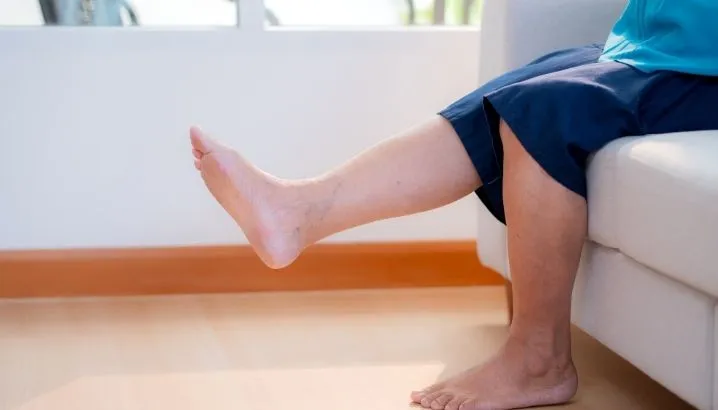
These simple exercises can be done anywhere — even at your desk or while waiting. Calf raises (rising up on your toes repeatedly) directly activate the calf pump. Ankle pumps (flexing and pointing your feet while seated or lying down) are particularly useful after long periods of sitting or travelling.
Both exercises increase venous return without placing any significant pressure on the vein walls.
Cycling at Low Resistance
Stationary or road cycling at a comfortable resistance level keeps the legs moving rhythmically without impact. It is particularly useful for patients who find walking painful or who are recovering from vein procedures. Keep resistance low — grinding through high resistance on a bike is no different from heavy squatting in terms of venous pressure.
Leg Elevation Exercises
Lying on your back and raising your legs above heart level — even resting them against a wall — allows gravity to assist venous drainage passively. Gentle leg raises and scissor movements in this position combine drainage with mild muscle activation.
Which Exercises Make Varicose Veins Worse?
This is where most patients — and frankly, most generic fitness articles — get it wrong.
Heavy Weightlifting and Resistance Training
Heavy deadlifts, squats, and leg press machines significantly increase intra-abdominal pressure. This pressure compresses the vena cava — the large vein returning blood to the heart — and forces blood back down into the leg veins. For veins with already-damaged valves, this is directly harmful.
This same pressure-pooling mechanism is also what drives the well-documented pattern of pain worsening through the day — a phenomenon explained in detail in our post on why varicose veins hurt more by end of the day.
This does not mean all strength training is off-limits. Light resistance with high repetitions, avoiding breath-holding, and keeping rest positions elevated can make it manageable. But heavy compound lifts should be avoided or carefully discussed with your vascular specialist.
High-Impact Running on Hard Surfaces
Sustained high-impact running — particularly on concrete or asphalt — creates repetitive jarring forces through the legs. Combined with the sustained upright position and increased heart rate, this can worsen leg swelling and spider veins in susceptible individuals.
Softer surfaces, shorter distances, and compression stockings can reduce this risk if running is important to you.
Exercises Involving Breath-Holding
This is the gap almost every competitor blog misses entirely. The Valsalva maneuver — the physiological response that occurs when you hold your breath and strain, as in heavy lifting or certain yoga poses — dramatically spikes venous pressure throughout the body, including the leg veins.
Any exercise that routinely involves breath-holding under exertion — heavy weightlifting, certain Pilates moves, intense abdominal exercises — should be approached with significant caution or avoided altogether.
How Should You Exercise Safely With Varicose Veins?
Knowing what to do and knowing how to do it safely are two different things.
Wear Compression Stockings Before You Start
Put on medical-grade compression stockings before beginning any exercise session. They support the vein walls, reduce the diameter of distended veins, and improve the efficiency of the calf pump during movement. This single habit reduces exercise-related discomfort dramatically.
Time Your Exercise Wisely
Morning exercise is generally better for vein health. Veins are less distended after a night of rest with legs horizontal. Exercising after long periods of standing — when veins are already engorged — is harder on the system.
Keep initial sessions to 20–30 minutes. Build up gradually. Stop if you notice increased throbbing, significant swelling, or visible worsening of the veins.
Post-Exercise Recovery Matters as Much as the Exercise Itself
Elevate your legs immediately after exercise. This assists drainage and prevents the pooling that commonly occurs after blood flow has been increased by activity. Apply a cool compress if there is swelling or burning. Hydration is also underappreciated — dehydration thickens the blood and makes venous return harder.
When Exercise Is Not Enough — What Treatment Can Actually Fix the Problem
Exercise manages symptoms. It does not repair damaged vein valves.
If you are experiencing persistent leg pain, significant swelling, skin discolouration, bleeding from a vein, or visible worsening of varicose veins despite conservative care, these are signs that medical evaluation is overdue.
Modern varicose vein treatments are minimally invasive. Endovenous laser ablation, sclerotherapy, and radiofrequency ablation close off the faulty vein through small needle access — no large incisions, no long hospital stays, and recovery measured in days rather than weeks.
For a full breakdown of which procedure suits which presentation, the varicose vein treatment options available at Lokmanya Hospitals cover everything from compression therapy and EVLT to sclerotherapy and surgical management in one place.
If you are in Pune or Pimpri Chinchwad and your symptoms are affecting your daily life, it is worth having a proper vascular assessment done. The team at Lokmanya Hospitals offers expert vascular evaluation and treatment. Book a consultation at lokmanyahospitals.com — a straightforward conversation with a specialist can tell you exactly where you stand and what your options are.
Final Thoughts
Varicose veins do not mean a life of inactivity. They mean being deliberate about how you move.
Walking, swimming, calf exercises, and cycling support your veins every day. Heavy lifting, high-impact running, and breath-holding under strain work against them. The difference between making your condition better and making it worse often comes down to these specific choices.
Wear your compression stockings. Move daily. Elevate your legs after activity. Stay hydrated. And if symptoms are not improving — or are getting worse — do not wait. Vein conditions are progressive, and early treatment produces far better outcomes than delayed intervention.
Help is available, and this is a very manageable condition in experienced hands.
Frequently Asked Questions
Can varicose veins go away completely with exercise alone? Exercise improves symptoms and slows progression, but it cannot reverse damaged vein valves. Once the valve is faulty, it remains so — exercise manages the condition but does not cure it. Medical treatment is needed to permanently close or remove the affected vein.
Is yoga safe for varicose veins? Some yoga poses are helpful — particularly legs-up-the-wall and other inverted or reclined positions that drain the veins passively. However, prolonged standing poses, intense abdominal holds, and any pose that involves sustained breath-holding and straining should be avoided.
Does having varicose veins during pregnancy change the exercise rules? Yes. Pregnancy increases venous pressure significantly due to the growing uterus compressing pelvic veins. Walking and swimming remain safe and beneficial, but any exercise involving lying flat on the back after the first trimester, heavy exertion, or significant impact should be cleared with your obstetrician and vascular specialist together.
How long before I see improvement in symptoms after starting a regular walking routine? Most patients notice a reduction in leg heaviness and end-of-day swelling within two to four weeks of consistent daily walking. Full symptomatic benefit builds over two to three months when walking is combined with compression stocking use and leg elevation.
Does sitting cross-legged or crossing your legs make varicose veins worse? Crossing your legs at the knee compresses the veins in the back of the knee and restricts blood flow upward. Done habitually over years, this does contribute to increased venous pressure and can worsen existing varicose veins. Sitting with feet flat on the floor — and taking regular movement breaks — is better for vein health.