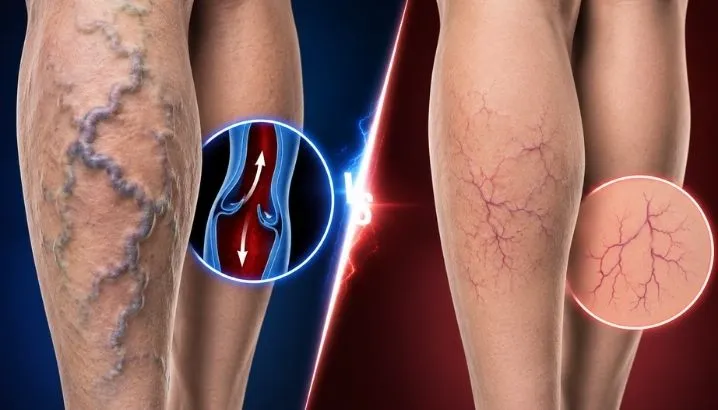
Why Do Varicose Veins Come Back Even After Treatment? The Truth Patients Deserve to Know
Category: Blogs
 Wed Jun 17 2026


You went through the treatment. The veins were gone. And now, months or years later, you are looking at your legs and thinking are they back? If this is you, you are not alone, and more importantly, you are not imagining it.
Varicose veins can and do return after treatment but the reason is almost never that the treatment failed. Understanding why this happens is the first step toward making better decisions about your vein health.
Patients seeking varicose veins recurrence treatment in Pimpri Chinchwad often arrive at Lokmanya Hospitals (lokmanyahospitals.com) a trusted multispecialty hospital with this exact question, and the answer is more nuanced than most people expect.
Key Takeaways:
- Why varicose veins returning after treatment is a recognised medical phenomenon, not a failure
- The biological and lifestyle reasons veins come back
- How different treatments compare in terms of recurrence rates
- What warning signs to watch for after treatment
- How to genuinely reduce your risk of veins returning
Is It Normal for Varicose Veins to Return After Treatment?
Yes and this needs to be said clearly so patients are not blindsided.
What Recurrence Actually Means
Recurrence means that varicose veins reappear in the same area or nearby after a period of successful treatment. This is different from residual disease where veins that were not fully treated remain visible though patients often cannot tell the difference without a scan.
True recurrence happens because varicose veins are a symptom of an underlying condition called chronic venous disease, not a standalone problem. Treating visible veins does not cure the disease driving them.
How Common Is This What the Data Shows
Studies published in vascular surgery literature estimate that recurrence rates range from 20 to 80 percent over ten years, depending on the treatment method used, the extent of initial disease, and patient lifestyle factors.
That is a wide range and it reflects how variable this condition is from person to person. Some patients go ten years without a single vein returning. Others see new veins within two years. Neither outcome means the treatment was wrong.
Why This Frustrates Patients And What to Understand
The frustration is completely valid. Patients invest time, money, and trust into treatment and expect a permanent result.
The honest clinical truth is that vein treatment is disease management, not a one-time cure. Once the genetic tendency toward weak vein valves is present, new veins can develop over time regardless of what was treated before.
What Actually Causes Varicose Veins to Come Back?
There are several distinct mechanisms. Most patients experience a combination of more than one.
New Vein Growth After Treatment Neovascularisation
This is the mechanism competitors almost never explain to patients. Neovascularisation is the body's attempt to repair itself after a vein is closed or removed. The body grows new, small blood vessels around the treated area to compensate for the lost drainage pathway.
The problem is that these new vessels while well-intentioned are structurally fragile. They often lack competent valves from the start, meaning venous reflux (blood flowing backward) begins almost immediately in these new vessels. Over time, they enlarge and become the next generation of varicose veins.
Incompetent Perforator Veins That Were Overlooked
This is one of the most clinically significant and least discussed causes of recurrence. Perforator veins are short connecting veins that link the surface veins of the leg to the deep venous system. When these become incompetent, they act as pressure release valves, pushing high-pressure blood from the deep system into the surface veins.
If a perforator vein contributing to the problem was not identified and treated during the initial procedure which is genuinely possible even with careful planning it continues to feed pressure into the surface veins. This is often the reason veins appear to "come back quickly" after treatment. What looks like recurrence is actually continued disease from an untreated source.
Genetics The Factor No Treatment Can Override
A strong family history of varicose veins is the single strongest predictor of recurrence. If both parents had varicose veins, your risk of redeveloping them after treatment is substantially higher than someone with no family history.
This same genetic tendency is also what drives the progression of disease through CEAP stages a system explained in detail in our guide on varicose vein symptoms, stages, and early warning signs. This is not a reason to avoid treatment. It is a reason to approach vein health as an ongoing commitment rather than a single event.
Lifestyle Factors That Accelerate Recurrence
Prolonged standing, obesity, sedentary work, and repeated pregnancies all increase venous pressure in the legs over time. Each of these independently contributes to the progression of chronic venous disease and therefore to the likelihood that new veins will develop after treatment.
Does the Type of Treatment Affect Whether Veins Return?
This is a question worth answering directly, because not all treatments carry the same recurrence profile.
Older Vein Stripping Methods
Traditional vein stripping surgery where the saphenous vein was physically removed through incisions historically showed recurrence rates as high as 50 to 60 percent at five years in older studies. Neovascularisation at the surgical site was a well-documented driver.
Endovenous Laser and Radiofrequency Ablation
Endovenous laser ablation and radiofrequency ablation the current standard of care show significantly lower recurrence rates in the five-year data. However, "lower" does not mean zero. Studies in journals including the Journal of Vascular Surgery show five-year recurrence rates of 15 to 30 percent with these methods, with technical success of the original closure being the strongest predictor of outcome.
Sclerotherapy and Its Limitations
Sclerotherapy where a chemical is injected to close the vein is effective for smaller veins and spider veins but carries higher recurrence rates when used as the sole treatment for larger varicose veins. It is most effective as a complement to ablation procedures, not as a standalone treatment for significant disease.
Why No Treatment Eliminates the Underlying Disease
This point cannot be overstated. Every treatment addresses the visible vein. None of them repairs the inherited tendency toward valve weakness. The underlying venous insufficiency continues to progress, and new veins will form in adjacent areas over time even where treatment was technically perfect.
How Soon Do Varicose Veins Typically Return?
Timing varies, but patterns exist.
Short-Term Recurrence Within Two Years
Recurrence within the first one to two years after treatment usually points to one of two causes: an incompetent perforator vein that was not treated, or incomplete closure of the original vein. This type of early recurrence is best investigated with a duplex ultrasound scan, which can identify exactly where the pressure is coming from.
Long-Term Recurrence After Five Years
Recurrence appearing five or more years after treatment is more likely to represent true new disease either neovascularisation or progression of venous insufficiency in a different segment of the leg. This is not a treatment failure. It is the natural history of the underlying condition.
Warning Signs That Veins Are Returning
Watch for returning leg heaviness, renewed aching or throbbing at the end of the day, visible new blue or purple veins, ankle swelling that was not present before, and skin itching or discolouration around the ankle.
These are signals to return for assessment not to panic, but not to ignore either. In some patients, recurrent venous pooling can also raise the risk of superficial clot formation a complication covered in depth in our article on whether varicose veins can cause a blood clot and how superficial clots differ from DVT.
What Can You Do to Reduce the Chances of Recurrence?
There is genuine evidence behind these recommendations. This is not generic lifestyle advice.
Compression Stockings Consistently Underused
Medical-grade graduated compression stockings reduce the pressure that drives new vein formation. Worn consistently especially during work hours, travel, and exercise they measurably slow disease progression. Most patients stop wearing them once veins are treated. That is the wrong approach.
Weight Management and Venous Pressure
Every kilogram of excess body weight increases the pressure load on the venous system. Even a 5 to 10 percent reduction in body weight produces a measurable drop in venous pressure in the legs. This is one of the most impactful and entirely within-patient-control factors in recurrence prevention.
Daily Movement Specifically the Calf Pump
The calf muscles are the primary engine for pushing blood back up to the heart. Walking 30 minutes daily, doing calf raises, and avoiding prolonged sitting or standing without breaks keeps this pump active and reduces the pooling that accelerates vein disease.
Not all exercise has the same effect on venous pressure, however some forms of physical activity can worsen venous load rather than reduce it. Our dedicated guide on which exercises help varicose veins and which make them worse provides the full breakdown for patients at any stage of treatment.
Post-Treatment Duplex Ultrasound Surveillance
This is the gap almost every patient misses and almost every competitor blog ignores entirely. A duplex ultrasound at six months and then annually after treatment allows a vascular specialist to detect early signs of recurrence, identify any perforator veins causing renewed pressure, and intervene early before the problem becomes visible on the surface.
Most recurrence is caught and managed far more easily at this stage than when the patient notices it themselves. If your post-treatment plan did not include scheduled follow-up ultrasound scans, ask your specialist about adding this.
What Are Your Options If Varicose Veins Have Already Come Back?
Retreatment is possible, effective, and often simpler than the first procedure because recurrent veins are frequently smaller and more localized than the original disease.
What a Specialist Will Assess Before Re-treating
A thorough duplex ultrasound mapping of the venous system is the essential first step. This identifies the source of recurrent pressure whether it is a previously missed perforator, neovascularisation at an old treatment site, or entirely new disease in a different vein segment. Treatment without this mapping is incomplete.
Re-treatment Options
Depending on what the scan reveals, foam sclerotherapy, repeat laser ablation, or targeted perforator vein treatment may be appropriate. The choice depends on the size, location, and pressure source of the returning veins not on a one-size-fits-all protocol.
For a full overview of the minimally invasive procedures available from EVLT and radiofrequency ablation to VenaSeal and ultrasound-guided foam sclerotherapy the varicose vein treatment options at Lokmanya Hospitals cover all stages of venous disease, including recurrent presentations.
If your varicose veins have returned and you are looking for varicose veins recurrence treatment in Pimpri Chinchwad or Pune, a proper vascular re-evaluation is the right next step. The vascular team at Lokmanya Hospitals offers detailed duplex-guided assessment and personalised retreatment planning. Visit Lokmanya hospital to book your consultation the earlier recurrence is assessed, the simpler the solution tends to be.
Final Thoughts
Varicose veins returning after treatment is not a failure yours or your doctor's. It is a predictable feature of a chronic, progressive disease that treatment controls but does not permanently cure.
The patients who do best long-term are those who treat their vein health as an ongoing commitment wearing compression regularly, staying active, managing their weight, and attending follow-up appointments even when their legs feel fine.
If your veins have returned, do not be discouraged. Retreatment is available, it works, and the earlier you act, the better the outcome. You have options and experienced vascular care makes a significant difference.
Frequently Asked Questions
Can varicose veins come back in exactly the same place they were treated?
Yes, though it is less common than recurrence in adjacent areas. When veins return at the exact treatment site, it is usually due to neovascularisation the body growing new vessels around the closed vein. This can be identified on duplex ultrasound and treated again effectively.
Does flying or long travel make varicose veins more likely to return?
Prolonged immobility during long flights or road journeys increases venous pooling and pressure, which over time contributes to disease progression. Wearing compression stockings during travel and doing regular calf exercises during the journey significantly reduces this risk.
If my varicose veins came back, does that mean I need the same treatment again?
Not necessarily. Recurrent veins are assessed individually the cause, size, and location determine the best retreatment approach. Many recurrent veins are treated with less invasive methods than the original procedure, such as foam sclerotherapy or targeted perforator treatment.
Is there any medication that prevents varicose veins from coming back?
No medication currently prevents varicose vein recurrence. Certain venoactive drugs such as diosmin and hesperidin can reduce symptoms like heaviness and swelling and may slow progression, but they do not stop veins from returning. Compression and lifestyle modification remain the most evidence-backed prevention strategies.
Can pregnancy cause varicose veins to return after treatment?
Yes. Pregnancy significantly increases venous pressure in the pelvis and legs due to hormonal changes and the growing uterus compressing pelvic veins. This makes pregnancy one of the most common triggers for recurrence after previously successful treatment. Women planning pregnancy after vein treatment should discuss this with their vascular specialist in advance.