Why Do Varicose Veins Hurt More at the End of the Day?
Category: Blogs
 Tue Jun 09 2026


You've noticed it — mornings are manageable, but by evening your legs ache, feel heavy, and throb in a way that makes you want to sit down and never stand up again.
This is not imagination. The worsening of varicose vein pain through the day follows a precise physiological pattern — and understanding it is the first step toward doing something about it.
If you're looking for varicose veins treatment in Pune, Lokmanya Hospitals offers specialist vascular care with advanced diagnostic and minimally invasive treatment options under one roof.
Key Takeaways :
- Why varicose vein pain follows a predictable morning-to-evening cycle
- What is actually happening inside your veins as the day progresses
- When varicose veins stop being a cosmetic issue and become a medical one
- What modern treatment options look like — and which suits your situation
- Simple daily habits that genuinely reduce end-of-day pain
What Are Varicose Veins and Why Do They Cause Pain?
Varicose veins are not simply unattractive — they are a sign that the venous system in your legs is under mechanical stress.
What Is Actually Happening Inside the Vein?
Your leg veins contain one-way valves that push blood upward toward the heart against gravity.
When these valves weaken or fail, blood flows backward and pools in the vein — a process called venous reflux.
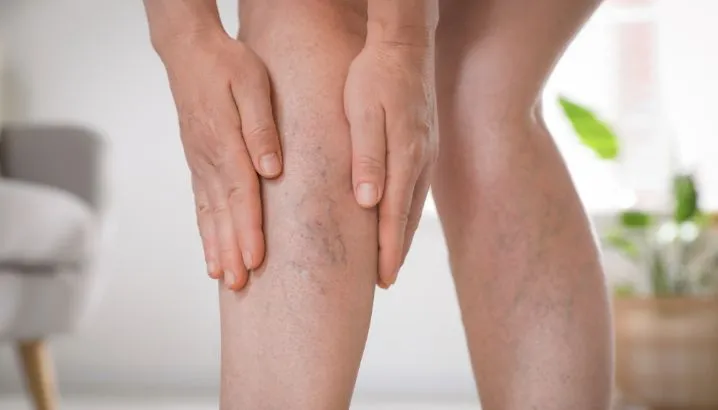
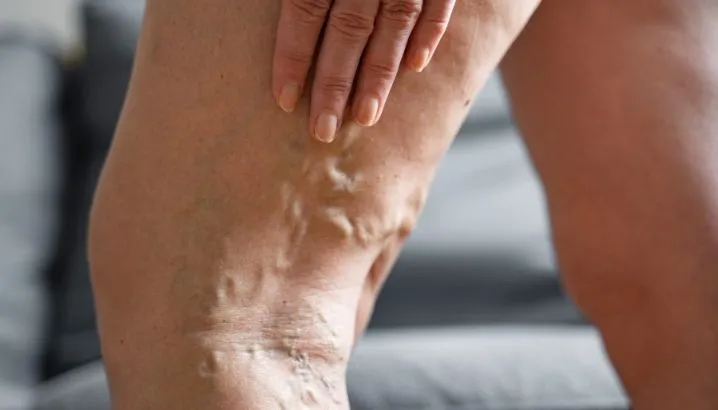
The vein walls, under this abnormal backpressure, stretch and bulge outward. What you see on the surface as a twisted, raised rope under the skin is a vein that has lost its structural integrity.
Why the Pain Is Circulatory, Not Cosmetic?
The pooled blood creates elevated pressure within the vein wall and surrounding tissue.
This pressure is what causes the aching, heaviness, and throbbing — not the appearance of the vein itself.
This is why appearance and symptoms don't always match. Some large, visibly prominent varicose veins are surprisingly painless, while smaller veins with significant reflux can produce severe discomfort.
Who Gets Varicose Veins and Why?
Varicose veins affect approximately 23% of adults, according to research published in the Journal of Vascular Surgery.
Risk factors include prolonged standing or sitting, pregnancy, obesity, family history, and age. Women are affected more frequently than men, though men often present with more advanced disease because they delay seeking care.
Why Does the Pain Get Worse as the Day Goes On?
This is the question that brings most people to search for answers — and the answer is rooted in physics and physiology working together against you.
The Science of Venous Pooling and Gravity
Every minute you spend upright, gravity pulls blood toward your feet.
In a healthy venous system, valve function efficiently counteracts this. In a vein with reflux, each hour of standing or sitting adds to the volume of blood pooling in the lower leg.
By evening, that accumulated pooling creates significantly more distension and pressure than existed in the morning — which is directly why the pain is worse at 6pm than at 8am.
Why Your Job Makes It Worse?
Teachers, surgeons, retail workers, and desk-based professionals who sit without moving are among the highest-risk groups for severe end-of-day varicose vein symptoms.
Static upright posture — whether standing still or sitting with legs down — removes the pumping action of the calf muscle, which normally assists venous return.
When the calf muscle isn't contracting regularly, blood has no mechanical assist returning upward. The venous pooling accelerates.
The Role of Heat Through the Day
This is a factor competitors almost never mention: body temperature rises through the day, and heat causes veins to dilate.
Dilated veins pool more blood. More pooled blood means more wall distension and more pain.
Hot weather, warm offices, and warm showers at the end of the day all amplify symptoms for the same reason. This is why varicose vein pain is typically worse in summer than in winter.
What Does Varicose Vein Pain Actually Feel Like?
Patients describe varicose vein discomfort in several distinct ways — and recognising your pattern matters for diagnosis and treatment.
The Sensations Patients Most Commonly Report
Heaviness and fatigue in the legs — as though the legs are carrying more weight than they should — is the most consistently reported symptom.
Aching and throbbing, particularly around the vein itself, is common. Itching directly over a varicose vein is caused by reduced skin circulation and is a signal that venous pressure is affecting the surrounding tissue.
Nocturnal cramps — cramping that wakes you from sleep — occur when pooled blood causes local metabolic changes in the muscle environment.
Symptoms That Cross Into Warning Territory
Skin discolouration around the ankle — a brownish or reddish staining — is called haemosiderin deposition and indicates that red blood cells are leaking through the vein wall into surrounding tissue under chronic pressure.
This is not a cosmetic finding. It signals that the venous system has been under sufficient pressure for long enough to cause tissue damage, and it places you at higher risk of venous ulceration if left unaddressed.
How Serious Can Varicose Veins Get If Left Untreated?
Varicose veins are progressive. They do not spontaneously improve, and untreated chronic venous insufficiency follows a predictable deterioration pathway.
Skin Changes and Venous Eczema
Lipodermatosclerosis — hardening and thickening of the skin around the lower leg — develops when prolonged venous hypertension causes chronic inflammation in the subcutaneous tissue.
The skin becomes tight, discoloured, and tender. Once established, this change is partially irreversible even after successful vein treatment.
Venous Ulcers — The Endpoint Nobody Wants
Venous leg ulcers are open wounds that develop when skin breakdown from chronic venous hypertension becomes complete.
They are painful, slow to heal, and have a high recurrence rate without definitive treatment of the underlying venous disease. They account for the majority of chronic wound burden in vascular outpatient clinics.
The DVT Connection
Superficial thrombophlebitis — clotting within a varicose vein — is a direct complication of stagnant pooled blood.
In a subset of cases, this clot can extend into the deep venous system, creating deep vein thrombosis (DVT) — a potentially life-threatening condition. Any sudden increase in pain, redness, and hardness along a varicose vein warrants same-day medical evaluation.
Bleeding Varicose Veins
This complication is almost never mentioned in patient content — yet it is real and can be frightening.
Varicose veins that lie just beneath the skin surface can bleed significantly from minor trauma — a bump against furniture, a minor scratch. The bleeding can be profuse because venous pressure in the dilated vein is elevated.
If this happens: lie down, elevate the leg above heart level, apply firm pressure, and seek emergency care.
How Are Varicose Veins Diagnosed?
Clinical Examination
Your vascular surgeon will assess the pattern and distribution of visible varicosities, check for skin changes, assess ankle swelling, and identify any signs of advanced disease.
Clinical examination alone cannot determine the severity of venous reflux — it tells you what you can see, not what is happening in the veins below the surface.
Duplex Ultrasound — The Investigation That Changes Everything
Duplex ultrasound is the gold standard investigation for varicose veins. It maps the venous anatomy, identifies which valves have failed, measures the degree and direction of reflux, and rules out DVT.
Without a duplex scan, any treatment plan is incomplete. A clinic that offers treatment without duplex mapping is working blind. This investigation is non-invasive, painless, and takes approximately 30–45 minutes.
What Treatment Options Are Available?
Modern varicose vein treatment has moved decisively away from surgery toward minimally invasive, day-procedure options with rapid recovery.
For patients in Pune looking for a structured overview of what treatment involves before booking a consultation, the Varicose Veins Treatment at Lokmanya Hospitals outlines the full range of options available and what to expect at each stage.
Compression Therapy — The Foundation
Medical-grade compression stockings apply graduated external pressure that assists venous return and reduces pooling.
They do not treat the underlying reflux — but they meaningfully reduce symptoms and are the cornerstone of conservative management while awaiting or following definitive treatment.
Endovenous Laser Treatment (EVLT)
EVLT is the current standard of care for great saphenous vein incompetence — the most common cause of varicose veins.
A thin laser fibre is introduced into the vein under ultrasound guidance. Laser energy delivered along the vein length causes it to close permanently. The procedure is performed under local anaesthesia, takes approximately 45–60 minutes, and patients walk out the same day.
Clinical evidence, including data from the NICE guidelines (UK) and multiple Cochrane reviews, supports EVLT as superior to surgical stripping in terms of recovery time, recurrence rate, and patient satisfaction.
Sclerotherapy
Sclerotherapy involves injecting a chemical solution directly into smaller varicose veins or residual veins after EVLT, causing the vein wall to collapse and seal.
It is highly effective for tributary veins and thread veins and is typically performed as an outpatient procedure requiring no anaesthesia.
Surgical Stripping
Traditional vein stripping — physically removing the vein through small incisions under general anaesthesia — remains available but is now reserved for specific anatomical situations or cases where endovenous techniques are not suitable.
For most patients presenting today, surgery is not the first-line recommendation.
If you're experiencing significant leg pain, skin changes, or have been told you have varicose veins but haven't had a duplex scan yet, the vascular team at Lokmanya Hospitals in Pune and Pimpri Chinchwad offers comprehensive assessment and the full range of modern treatment options. Visit lokmanyahospitals.com to book a vascular surgery consultation.
What Can You Do Today to Reduce End-of-Day Pain?
Elevation — Immediate and Effective
Elevating your legs above heart level for 20–30 minutes after work directly reduces venous pooling by using gravity in your favour instead of against you.
This is the single most effective immediate relief measure. A pillow under the legs while lying on a sofa is sufficient — you do not need specialised equipment.
Movement Habits That Reduce Pooling
Short walks every 30–45 minutes activate the calf muscle pump and assist venous return far more effectively than occasional longer walks.
If your work requires prolonged standing, shift your weight regularly, rise on your toes, and flex your ankles — these micro-movements engage the calf pump without leaving your station.
What to Avoid?
Prolonged static standing or sitting is the primary driver of end-of-day symptoms — breaks and movement are non-negotiable, not optional.
Avoid hot baths or showers immediately after a long day on your feet — heat dilates veins and will temporarily worsen pooling. Cool or lukewarm water is significantly more comfortable for varicose vein sufferers.
Tight clothing around the thigh or waist that restricts venous return should also be avoided.
Final Thoughts
Varicose vein pain worsening through the day is not something you simply have to live with — it follows a clear physiological pattern, it is progressive if untreated, and it responds well to both simple daily measures and definitive modern treatment.
The key points to carry forward: gravity and heat accumulate venous pooling across the day; this pooling is what drives your evening pain; compression, elevation, and movement all reduce it; and duplex-guided minimally invasive treatment can address the root cause with minimal disruption to your life.
Do not wait for skin changes or ulcers to appear before seeking an assessment. Early treatment produces better outcomes, shorter recovery, and lower recurrence rates — and today's procedures are far removed from the surgery patients feared a generation ago.
Frequently Asked Questions
Does walking make varicose veins better or worse?
Walking actually helps varicose veins by activating the calf muscle pump, which assists blood return toward the heart. Regular walking is one of the best lifestyle interventions for reducing symptoms. What worsens varicose veins is prolonged standing or sitting still — not movement itself.
Are varicose veins dangerous if I leave them untreated for years?
Yes, over time untreated varicose veins can progress to skin damage, venous eczema, and in advanced cases, venous leg ulcers that are difficult to heal. There is also a risk of superficial clotting that can occasionally extend into deeper veins. Getting a duplex ultrasound assessment gives you an accurate picture of your current disease severity rather than guessing based on appearance alone.
What is the fastest way to relieve varicose vein pain at night?
Elevating your legs above heart level for 20–30 minutes before bed reduces the pooled blood volume that has accumulated through the day and provides meaningful relief. Cooling the legs with a damp cloth or cool shower can also help, since heat worsens venous dilation. Medical-grade compression stockings worn during the day reduce the volume of pooling that builds up in the first place.
Can varicose veins come back after laser treatment?
New varicose veins can develop over time after any treatment, but the treated vein itself does not recur after successful EVLT. Recurrence is more likely in patients with extensive venous disease, strong family history, or occupations involving prolonged standing. Follow-up duplex scanning at one year post-treatment is standard practice to assess for new reflux development.
Is varicose vein treatment covered under health insurance in India?
Many health insurance policies in India cover varicose vein treatment when it is classified as medically necessary — typically when there is documented venous insufficiency, skin changes, or ulceration. Purely cosmetic thread vein treatment is generally not covered. It is advisable to check with your insurer and obtain a pre-authorisation letter based on your duplex scan findings and clinical documentation before scheduling treatment.