Can Sitting All Day Cause Varicose Veins? What Research Actually Says — And What Desk Workers Need to Know
Category: Blogs
 Fri Jun 19 2026


If you spend most of your day sitting at a desk and your legs feel heavy, achy, or swollen by evening — your body may already be sending you a signal worth paying attention to.
Prolonged sitting is a recognised risk factor for varicose veins, and the research behind that statement is more substantial than most people realise.
But does sitting directly cause varicose veins — or is the picture more complicated than that? Patients across Pimpri Chinchwad and Pune who work long desk hours are increasingly presenting to vascular specialists with early vein disease, and many are surprised it happened to them.
At Lokmanya Hospitals (lokmanyahospitals.com), a trusted multispecialty hospital offering varicose veins treatment in Pimpri Chinchwad, this question comes up in clinical consultations more than almost any other — and the honest answer is worth understanding fully.
Key Takeaways :
- What the research actually says about sitting and varicose vein development
- The exact biological mechanism that makes prolonged sitting harmful to veins
- Why standing desks are not automatically a solution
- Practical, evidence-based changes desk workers can make starting today
- When leg symptoms after long sitting hours need medical evaluation
Does Sitting All Day Actually Cause Varicose Veins — What Does the Research Say?
The direct answer: sitting alone does not cause varicose veins, but it is a well-established accelerating risk factor — particularly in people who already carry a genetic predisposition toward vein disease.
Our article on whether varicose veins can cause a blood clot and how a superficial clot differs from DVT explains the warning signs desk workers specifically need to recognise.
What the Studies Show
Research published in occupational health and vascular medicine literature consistently identifies sedentary occupational behaviour as an independent risk factor for chronic venous insufficiency.
A study examining venous disease in office workers found significantly higher rates of venous symptoms — leg heaviness, swelling, and visible veins — in those who sat for more than six hours daily compared to those with mixed activity patterns.
The Bonn Vein Study, one of the largest epidemiological studies of venous disease in Europe, identified prolonged sitting and standing as two of the most significant occupational contributors to varicose vein development — ranking alongside age, sex, and family history.
The Difference Between a Risk Factor and a Direct Cause
This distinction matters clinically. Sitting does not break a vein valve the way a single traumatic event might damage a knee. Instead, it creates the sustained pressure conditions under which genetically predisposed vein valves deteriorate faster than they otherwise would.
Think of it this way: if your vein valves were going to weaken at 60 because of your genetics, years of prolonged sitting could shift that timeline to 40. The cause is the underlying biology. The sitting accelerates it.
A Growing At-Risk Group — Remote Workers and IT Professionals
This is a gap that almost no competitor content addresses. The post-2020 shift toward remote and hybrid work has created a substantial new population of at-risk patients. Home-based workers frequently sit longer, take fewer natural movement breaks, and lack the incidental activity — walking to meetings, moving between floors — that office environments provide.
Vascular specialists are seeing earlier presentations of venous symptoms in people in their late 20s and 30s in desk-based careers. This is not coincidental.
What Happens Inside Your Veins When You Sit for Long Hours?
To understand the risk, you need to understand the mechanism. This is the part most generic health content skips entirely.
How the Calf Muscle Pump Works
Your heart pumps blood out to the body with force — but returning blood from the legs back to the heart requires its own pumping system. The calf muscles serve as the primary pump for venous return from the lower limbs.
Every time you take a step, contract your calf, or flex your ankle, the calf muscle squeezes the deep veins of the leg and pushes blood upward toward the heart. One-way valves inside the veins prevent that blood from falling back down between contractions.
When you sit still for extended periods, this pump essentially stops. The muscle is not contracting, so no active force is pushing blood upward.
Venous Pooling — What It Is and Why It Damages Veins
With the calf pump inactive, blood accumulates — or pools — in the leg veins. This is called venous stasis or venous pooling. The pooled blood increases the pressure inside the vein wall.
Over time, this sustained elevated pressure — called venous hypertension — stretches the vein wall and stresses the valves.
Valves that are repeatedly exposed to this abnormal back-pressure begin to lose their ability to close properly.
Once a valve becomes incompetent, blood flows backward whenever the person stands up — venous reflux — and a vicious cycle of increasing pressure and valve deterioration begins.
The Accumulation Over Years
A single long day at a desk does not create varicose veins. But years of repeated venous pooling, repeated pressure spikes on already-stressed valves, and insufficient calf pump activation cumulatively produce the structural valve damage that results in visible varicose veins and chronic venous symptoms.
This is precisely why people are surprised when veins appear in their 30s. The damage accumulated silently over a decade of desk work before it became visible.
Is Standing All Day Any Better — Or Is It the Same Problem?
Many people assume switching to a standing desk solves the problem. The research says otherwise.
What the Evidence Shows About Standing
Prolonged standing carries an equivalent or higher risk of varicose vein development compared to prolonged sitting — a finding that surprises most patients. Standing keeps the legs in the gravitational column continuously, meaning blood must fight uphill at all times without the periodic relief of movement.
The San Francisco VEIN Study and subsequent occupational vascular research both identify prolonged standing as a stronger independent risk factor than prolonged sitting for varicose vein formation and symptom progression.
Why Both Extremes Are Harmful for the Same Reason
The underlying problem in both sitting and standing is not the position itself — it is the absence of movement. Whether you are sitting motionless or standing motionless, the calf pump is not activating, venous pooling is occurring, and pressure is building in the leg veins.
A standing desk used incorrectly — standing still for hours — provides no vascular benefit over a sitting desk. In some cases, it is worse.
What Actually Matters — Movement Frequency
The research consistently points to one variable as most protective: how frequently you move, not how long you sit or stand. Short movement breaks every 20 to 30 minutes — even 2 minutes of walking or calf activation — reset venous pressure, activate the calf pump, and interrupt the pooling cycle before it causes sustained damage.
This is a fundamentally different message from "sit less, stand more." The correct message is: move more frequently, regardless of your default position.
Who Is Most at Risk — Can Varicose Veins Develop in Your 20s and 30s From a Desk Job?
Yes — and this is happening with increasing frequency in clinical practice.
How Sedentary Work Accelerates Inherited Risk
Genetics remains the strongest single risk factor for varicose veins. If one parent has varicose veins, your risk is approximately 40 to 50 percent. If both parents are affected, the risk rises above 70 percent.
What desk work does is compress the timeline. A person with strong genetic risk who also spends 9 to 10 hours daily seated — often with legs bent at the knee, which further restricts venous return — may develop symptomatic vein disease a full decade earlier than their parents did.
Gender and Early-Onset Vein Disease
Women in desk-based careers face compounded risk. Hormonal fluctuations during menstrual cycles, combined with prolonged sitting, create periods of heightened vein wall laxity — where progesterone-driven relaxation of smooth muscle in vein walls coincides with the pressure of sedentary venous pooling.
Women who sit for long hours professionally and who are also on hormonal contraception carry a meaningfully higher risk of early vein disease than the general population.
Warning Signs in Younger Adults That Should Not Be Dismissed
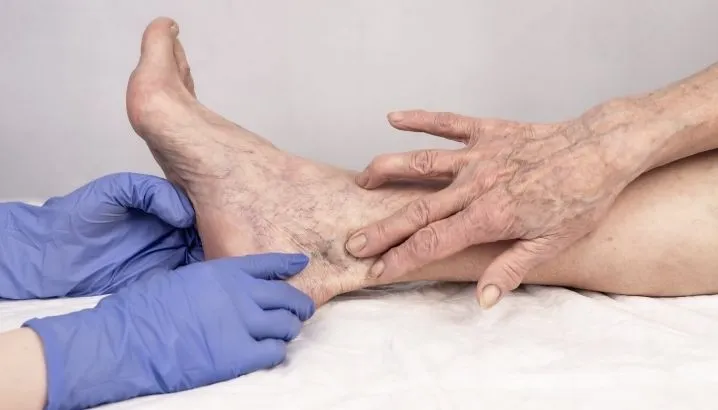
Leg heaviness that develops during the working day and improves overnight, ankle swelling that appears by late afternoon, aching along the inner calf or thigh, and visible blue or purple lines on the skin — these are not normal features of a 28-year-old's workday.
They are symptoms of venous insufficiency presenting early, and they warrant evaluation rather than reassurance.
For a full breakdown of how vein disease progresses from subtle early signs to advanced stages, our guide on varicose vein symptoms, stages, and early warning signs explains exactly what to watch for at each point.
What Practical Changes at Your Desk Can Actually Protect Your Veins?
These are not generic wellness tips. Each recommendation has a direct physiological basis.
The 30-Minute Movement Rule
Set a movement reminder every 25 to 30 minutes. Stand up, walk to a water point, take a brief walk around the room — anything that contracts the calf muscles and activates venous return. Even two minutes of walking is sufficient to clear venous pooling and reset pressure in the leg veins.
For desk workers who want to build a more structured exercise routine around vein health, our dedicated guide on which exercises help varicose veins and which make them worse covers safe and unsafe movement in detail, including what to avoid if veins are already symptomatic.
Research in preventive vascular medicine supports this interval as the most practical and effective for desk workers. It does not require a gym, a standing desk, or any equipment.
Desk Exercises That Activate the Calf Pump Without Leaving Your Seat
Ankle pumps — repeatedly flexing and pointing the feet — activate the calf pump directly while seated. Heel raises while sitting, toe taps on the floor, and gentle knee lifts all produce enough calf contraction to stimulate venous return.
Doing these for 60 seconds every half hour, consistently, produces a measurable reduction in venous pooling over the course of a working day.
Workstation Adjustments That Reduce Pressure
Avoid sitting with knees bent sharply above 90 degrees — this position compresses the popliteal vein behind the knee and directly impairs venous return from the lower leg. Chair height should allow feet to rest flat on the floor with knees at approximately a right angle.
Avoid crossing your legs at the knee — a habit that compresses veins and is consistently associated with worsening venous symptoms in people already predisposed to vein disease.
Hydration — The Most Overlooked Factor
This is one of the most consistently ignored aspects of vein health in patient-facing content. Dehydration increases blood viscosity — making blood thicker and harder for the venous system to return against gravity.
Adequately hydrated blood flows more efficiently through the venous system. For desk workers in Pune's climate — particularly during summer — maintaining consistent fluid intake throughout the working day is a genuinely protective habit for vein health.
When Do Symptoms Mean It Is Time to See a Vascular Specialist?
Not every heavy leg at the end of the day needs a scan. But some symptoms do.
Distinguishing Normal Tiredness From Vein Symptoms
Normal end-of-day leg fatigue improves quickly with rest and is not associated with visible changes on the skin.
Vein-related symptoms follow a specific pattern: they worsen progressively over the day, improve significantly with leg elevation overnight, and return the following day.
This cyclical worsening-and-improvement pattern is characteristic of venous insufficiency — not muscular fatigue.
Signs That Warrant a Duplex Ultrasound
Persistent ankle swelling, visible veins that were not present previously, skin discolouration or itching around the ankle, a feeling of throbbing or burning in the calf, and any episode of sudden leg redness or hardness along a vein — these symptoms justify a duplex ultrasound evaluation regardless of age.
What Early Treatment Looks Like
Vein disease caught early — before significant valve deterioration — is managed conservatively. Compression stockings, targeted exercise, weight management, and regular monitoring may be all that is needed for years.
When veins have progressed to the point of requiring intervention, modern treatments are minimally invasive — endovenous laser ablation and sclerotherapy are performed as outpatient procedures with return to normal activity within days.
The full range of procedures available — from EVLT and radiofrequency ablation to VenaSeal and phlebectomy — is covered in detail in the varicose vein treatment guide at Lokmanya Hospitals, which also outlines what each procedure involves and what recovery looks like.
If you work a desk job and have been noticing leg heaviness, swelling, or visible veins, a vascular assessment is worth scheduling sooner rather than later. The vascular team at Lokmanya Hospitals offers thorough duplex-guided evaluation and personalised treatment planning for varicose veins treatment in Pimpri Chinchwad and across Pune. Visit lokmanyahospitals.com to book your consultation — early assessment changes outcomes significantly.
Final Thoughts
Sitting all day does not directly cause varicose veins — but for millions of desk workers, it is quietly accelerating a process that genetics set in motion. The calf pump stops, blood pools, valve pressure builds, and over years, the damage becomes visible.
The good news is that the intervention required to break this cycle is genuinely simple: move frequently, activate your calves, stay hydrated, wear compression if symptoms are present, and get evaluated if something feels wrong.
Your veins are telling you something when your legs ache at the end of a long workday. The earlier you listen, the more options you have — and the better your outcome.
Frequently Asked Questions
Does using a standing desk prevent varicose veins?
A standing desk does not automatically prevent varicose veins — standing motionless carries the same risk as sitting motionless, because the calf pump remains inactive in both cases. The benefit of a standing desk comes only when it encourages more frequent movement and position changes throughout the day, not from standing still for extended periods.
Can young people in their 20s develop varicose veins from desk jobs?
Yes — early-onset varicose veins in people in their 20s and early 30s is a growing clinical reality, particularly in those with a family history of vein disease who also work sedentary jobs. The combination of genetic predisposition and years of reduced calf pump activity accelerates valve deterioration significantly compared to those with active lifestyles.
Is it safe to take long-haul flights if you already have varicose veins?
Long-haul flights carry a meaningful risk for people with existing varicose veins because prolonged immobility in a confined space severely restricts venous return. Wearing medical-grade compression stockings throughout the flight, performing calf exercises regularly, staying well hydrated, and walking the aisle every hour significantly reduce the risk of both discomfort and deep vein thrombosis during air travel.
Does drinking coffee or tea make varicose veins worse?
Moderate coffee and tea consumption does not directly worsen varicose veins. However, both are mild diuretics that can contribute to dehydration if fluid intake is not maintained alongside them. Since dehydration increases blood viscosity and makes venous return harder, relying on coffee or tea as your primary fluid intake during a desk workday is not ideal for vein health. Balancing with adequate water intake is the practical solution.
If I start exercising regularly, will my varicose veins go away?
Exercise improves venous symptoms and slows disease progression significantly, but it does not reverse existing vein valve damage or make established varicose veins disappear. Veins that are already enlarged and visibly bulging require medical treatment to be permanently addressed. Exercise is most valuable as a preventive measure and as a complement to medical treatment — not as a substitute for it once the condition is established.

Dr. Pranjal Melge
- MBBS, DNB (General Surgery), DrNB (Vascular Surgery)
Consultant Vascular & Endovascular Surgeon