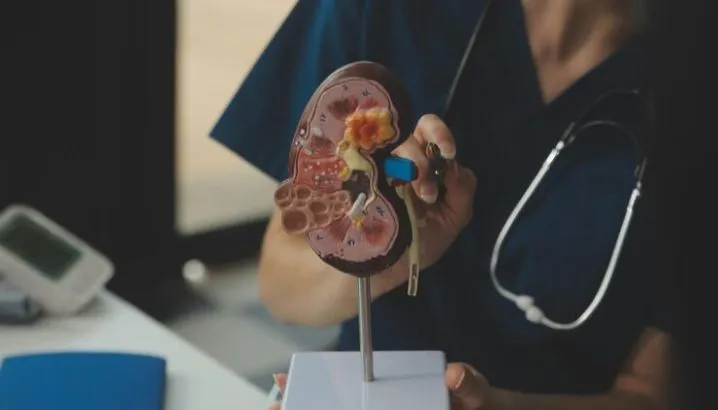
Is Dialysis Permanent? Kidney Failure Explained
Category: Urology
 Tue Mar 17 2026


Hearing the word "dialysis" can be frightening, often sparking fears of a lifelong dependence on machines.
However, it is crucial to understand that dialysis is not always permanent; whether it is a temporary measure or a long-term solution depends entirely on whether you are suffering from acute kidney injury or chronic kidney disease.
For sudden, reversible damage, dialysis may only be needed for a short time to support your body while your kidneys heal. For long-term conditions, it serves as a life-sustaining treatment or a bridge to a transplant.
At Lokmanya Hospitals, a leading Multispeciality Hospital in Pune, we understand that every patient’s journey is unique.
Our goal is not just to treat the condition but to help you understand your prognosis and options clearly. By distinguishing between temporary and permanent needs, we can create a care plan that offers the best quality of life possible.
Key Takeaways
- Not Always Forever: Dialysis can be temporary for patients with Acute Kidney Injury (AKI).
- Chronic vs. Acute: Permanent dialysis is typically required for End-Stage Renal Disease (ESRD), whereas acute cases often allow for recovery.
- Transplant Option: For many chronic patients, a kidney transplant can offer freedom from long-term dialysis.
- Regular Monitoring: Kidney function is checked frequently to see if dialysis can be reduced or stopped.
- Holistic Support: Treatment plans focus on lifestyle, medication, and emotional support alongside dialysis.
Why is dialysis prescribed in the first place?
To understand if dialysis is permanent, you first need to understand its role. Your kidneys are your body’s natural filtration system.
When they fail, harmful wastes, salt, and excess water build up in your blood. Dialysis acts as an artificial replacement for this lost function, cleaning the blood to keep your body chemically balanced.
Doctors prescribe dialysis when your kidneys can no longer support your body's needs—usually when function drops to 10–15%.
For a deeper look at the physiological impact of this condition, you can read our What Happens If Kidneys Fail? Treatment Guide.
When is dialysis temporary?
There is a significant difference between a kidney that is injured and one that has failed completely. Acute Kidney Injury (AKI) is a sudden episode of kidney failure or damage that happens within a few hours or a few days.
This causes a buildup of waste products in your blood and makes it hard for your kidneys to keep the right balance of fluid in your body.
AKI can be caused by:
- Severe infections (sepsis)
- Dehydration
- Blood loss from surgery or injury
- Reaction to certain medications
- Obstructions like kidney stones
In these cases, dialysis is often used as a "crutch." It supports the body temporarily, doing the work of the kidneys to give them a chance to rest and recover.
Once the underlying cause is treated—such as clearing the infection or restoring blood flow—kidney function often returns, and dialysis can be stopped.
When does dialysis become a permanent solution?
Dialysis becomes a long-term necessity when patients are diagnosed with Chronic Kidney Disease (CKD) that has progressed to End-Stage Renal Disease (ESRD).
Unlike acute injury, this damage happens slowly over months or years and is usually irreversible.
Common causes include:
- Uncontrolled diabetes
- Chronic high blood pressure
- Autoimmune diseases like Lupus
- Polycystic kidney disease
In these scenarios, the kidney tissue is permanently scarred and cannot regenerate. As the Best kidney treatment Hospital in Pune for comprehensive renal care, we help patients navigate this reality by shifting the focus from "recovery" to "management."
While the kidneys may not heal, appropriate dialysis management allows patients to lead active, fulfilling lives for many years.
If you are navigating this stage, exploring Advanced Kidney Failure Treatment options can help you understand how specialized care plans maintain your health over time.
Is there an alternative to permanent dialysis?
Yes, for many patients, permanent dialysis is not the only end-point. Kidney Transplantation is often considered the gold standard for treating End-Stage Renal Disease.
A successful transplant can free a patient from the need for daily or weekly dialysis sessions.
While you wait for a donor kidney, dialysis serves as a critical "bridge" treatment. It keeps you healthy and strong enough to undergo transplant surgery when a match becomes available.
It is important to remember that even if you start on "permanent" dialysis, you may still be a candidate for a transplant in the future, changing your prognosis significantly.
How do we determine the right path for you?
Deciding on the duration of dialysis requires rigorous monitoring. At Lokmanya Hospitals, we perform regular blood and urine tests to track your Glomerular Filtration Rate (GFR) and urine output.
If you are being treated for acute injury, we look for signs of recovery, such as increased urine production or stabilizing creatinine levels naturally. If these signs appear, we may gradually reduce dialysis sessions to see if the kidneys can take over.
For chronic patients, we focus on preserving any remaining kidney function (residual function), which can improve long-term outcomes and dietary flexibility.
How does Lokmanya Hospitals support your treatment journey?
Receiving a diagnosis of kidney failure is life-changing, but you do not have to face it alone. Our approach goes beyond just machines and medication.
We integrate nutritional counseling, psychological support, and advanced vascular care to ensure your treatment is sustainable.
Whether you require temporary support or long-term management, our kidney failure treatment at Lokmanya Hospitals is designed around your specific needs.
We educate families on home care, assist with transplant listings, and provide 24/7 support for any complications that arise.
Conclusion
The question "Is dialysis permanent?" does not have a single answer. For some, it is a short-term intervention leading to full recovery; for others, it is a long-term lifestyle adjustment or a stepping stone to a transplant.
Regardless of the duration, the goal remains the same: to give you the best possible life.
Do not let fear of the unknown delay your care. Early intervention is the key to recovery in acute cases and stability in chronic ones.
Contact Lokmanya Hospitals, Pune today to speak with our nephrology experts and build a treatment plan that offers you hope and health.
Frequently Asked Questions
1. How long does it take to know if my kidneys will recover?
Recovery time varies. In cases of acute kidney injury, improvement can be seen in a few weeks to a few months. Your doctor will monitor your kidney function tests closely during this period to determine if dialysis can be stopped.
2. Can I stop dialysis if I start feeling better?
No, you should never stop dialysis without your doctor's approval. Feeling better is often a sign that the dialysis is working, not necessarily that your kidneys have healed. Stopping treatment prematurely can lead to a dangerous buildup of toxins.
3. Does long-term dialysis damage the kidneys further?
Dialysis itself does not damage the kidneys; it does the work the kidneys can no longer do. However, because the machine is doing the filtering, the kidneys don't have to work as hard, which is why preserving "residual function" (whatever natural function is left) is a key part of our therapy.
4. What happens if I decide to stop dialysis permanently?
If a patient with kidney failure chooses to stop dialysis, toxins will accumulate in the body, eventually leading to death. This is a serious decision usually discussed in the context of palliative or hospice care, focusing on comfort rather than extending life.
5. Can lifestyle changes help me get off dialysis?
Lifestyle changes alone cannot cure end-stage kidney failure, but they are vital for those with acute injury to aid recovery. For chronic patients, a healthy diet and blood pressure control can protect the heart and blood vessels, making you a better candidate for a transplant.