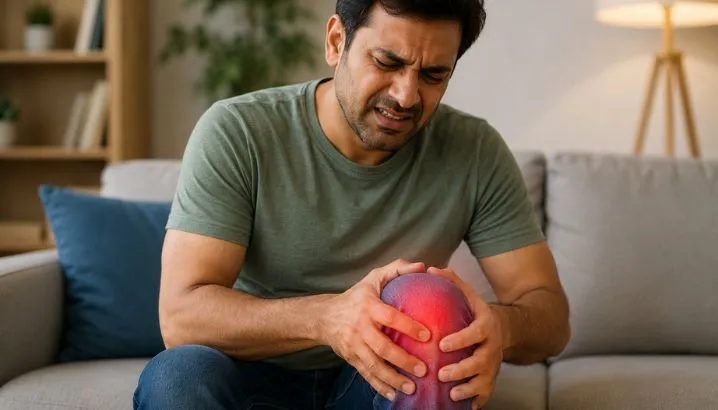
Why Ignoring Joint Pain Can Cost You Later
Category: Orthopedics
 Fri Aug 28 2026


I hear some version of the same sentence almost every week: "Doctor, I thought it would just go away on its own."
By the time many patients reach me, months or years have passed, and what could have been managed with simple, conservative care has become something far more complicated.
I'm Dr. Prashant Chandrakant Mundhe, Consultant Orthopaedic Surgeon at Lokmanya Hospitals, Pune, and if you're weighing whether to seek joint pain treatment in Pune now or wait a bit longer, I want to walk you through exactly what that waiting actually costs.
Key Takeaways
- Joint pain that's ignored tends to progress, not resolve on its own
- Cartilage has no blood supply; once it's significantly damaged, it can't repair itself the way skin or muscle can
- Untreated pain in one joint often causes you to unconsciously overload other joints
- Joint pain measurably increases fall risk, and that risk rises sharply with each additional painful joint
- Early treatment keeps more options on the table, waiting narrows them
Why Do People Wait So Long Before Treating Joint Pain?
Most patients don't ignore joint pain out of carelessness; they normalize it as an expected part of aging or an active lifestyle.
- Mild, intermittent pain is easy to attribute to a long walk, a workout, or "just getting older"
- Many patients hope rest alone will resolve what's actually a progressive, underlying problem
- Fear of surgery sometimes keeps people away from evaluation entirely, even though early treatment rarely means surgery
- The irony is that avoiding the doctor early often makes surgery more, not less, likely down the line
What's Actually Happening Inside the Joint While You Wait?
Untreated joint pain usually isn't static, the underlying process is often continuing quietly in the background.
- Early-stage cartilage wear typically starts subtly, with mild stiffness or occasional discomfort, while the joint may still look and function normally
- As wear continues, the protective cartilage cushioning your bones thins further, and the joint space narrows. Osteoarthritis: Symptoms, Causes and Treatment Options walks through what this specific progression looks like stage by stage, if you want the fuller clinical picture behind what's described here.
- Once damage becomes more advanced, bones can begin rubbing directly against each other, causing grinding sensations and significantly more pain
- The symptoms you notice are often a delayed signal, the underlying joint changes usually start well before the pain becomes hard to ignore
Why Can't Cartilage Just Heal Itself Over Time?
Because cartilage, unlike skin or muscle, has no blood supply of its own.
- Most tissues in your body heal by drawing nutrients and repair cells through blood flow; cartilage doesn't have that direct access
- This is precisely why cartilage damage that progresses past a certain point becomes very difficult to reverse naturally
- In earlier stages, cartilage-preserving approaches, physiotherapy, weight management, targeted injections, and minimally invasive procedures can genuinely slow or halt progression
- Once cartilage loss becomes extensive, the conversation shifts from "preserve" to "manage" or eventually "replace."
How Does Ignored Joint Pain Affect the Rest of Your Body?
Painful joints rarely stay isolated; your body compensates in ways that create new problems elsewhere.
- When one joint hurts, people naturally shift weight away from it, favor the other leg, shorten their stride, or avoid certain movements
- This compensation pattern places extra, uneven pressure on adjacent joints and muscles, which can create secondary pain and damage over time
- Reduced activity due to joint pain can also affect overall muscle strength, further destabilizing the joint you were trying to protect
- What starts as one joint's problem can quietly become a two- or three-joint problem if the compensation pattern continues long enough
Does Joint Pain Really Increase Your Risk of Falls?
Yes, and the data on this is more specific than most people realize.
- Research has found that people with pain in one lower-body joint, a knee or hip, are about 53 percent more likely to fall than those without joint pain.
- This tracks with findings from a National Institutes of Health-funded study following older adults over four years, which found a comparable increase in injurious falls tied to higher pain burden.
- That risk rises to roughly 74 percent with two affected joints and climbs further to around 85 percent, with three or four painful joints
- Falls in turn carry their own serious risk, particularly fractures, which become more likely as bone health and balance decline together with joint pain
- This is not a minor side detail; fall risk is one of the more concrete, measurable costs of leaving joint pain unmanaged
What Does Early Intervention Actually Change?
Early treatment keeps more and gentler options available.
- Physiotherapy, activity modification, and weight management are most effective before significant structural damage has occurred
- Injections, whether anti-inflammatory or lubricating, work best on joints that still have meaningful cartilage left to protect.
- The Benefits of Hyaluronic Acid Injections for Joint Health goes deeper into how this specific type of injection works and why timing matters for its effectiveness.
- Minimally invasive procedures can address early structural issues that would otherwise progress toward more extensive damage
- The earlier you're evaluated, the more of these lower-intervention options remain realistically effective for you.
When Does Waiting Finally Force Surgery That Could Have Been Avoided?
Once cartilage loss becomes advanced and bone-on-bone contact sets in, conservative treatment options genuinely narrow.
- At this stage, pain often becomes more constant, less related to activity, and harder to manage with medication alone
- Joint replacement becomes a realistic and often necessary option specifically because earlier, less invasive treatments are no longer effective on that level of damage
- Patients who reach this point sometimes describe years of gradually worsening pain that, in hindsight, had clear earlier warning signs
- This isn't meant to alarm you, it's meant to make clear that the window for simpler treatment is real, and it does close over time
If joint pain has been part of your routine for months or years and you've been putting off getting it looked at, I'd encourage an evaluation now rather than waiting for the pain to force the decision later. I see patients for joint pain and orthopaedic consultations at Lokmanya Hospitals, Pune.
Final Thoughts
Joint pain rarely stays the same if left alone, it tends to progress quietly, sometimes for years, before demanding attention on its own terms.
Cartilage can't repair itself the way other tissues can, and the compensation patterns your body develops to avoid pain can create new problems well beyond the original joint.
Acting early doesn't just reduce your current discomfort; it keeps a wider range of simpler, less invasive treatments available to you. Waiting doesn't make the decision go away; it usually just narrows your options when you eventually do make it.
Frequently Asked Questions
Can cartilage damage be reversed?
Early-stage cartilage thinning can sometimes be slowed or stabilized with treatment, but once significant cartilage loss occurs, it generally cannot fully regenerate on its own.
What happens if you ignore joint pain for years?
It typically progresses, cartilage continues to wear, joint space narrows, and compensation patterns can cause secondary pain in other joints and muscles.
Does ignoring knee pain make arthritis worse?
Yes, untreated osteoarthritis tends to progress, and delaying treatment often means starting care at a more advanced, harder-to-manage stage.
Can joint pain increase fall risk?
Yes, studies show pain in even one lower-body joint significantly raises fall risk, and that risk increases further with each additional affected joint.
When should joint pain be taken seriously?
Any joint pain that persists beyond a few weeks, worsens with rest, or affects your daily activities and sleep should be evaluated rather than monitored indefinitely.
Is joint pain always a sign of arthritis?
No, joint pain can stem from ligament, tendon, or muscle issues too, but persistent pain of any cause benefits from a proper diagnosis rather than assumption.
Can weight loss help with joint pain?
Yes, reducing excess weight can meaningfully ease pressure on weight-bearing joints like the knees and hips, slowing further wear.
Do all joint problems eventually need surgery?
No, many respond well to physiotherapy, activity changes, and injections when treated early, surgery becomes more likely mainly when treatment is significantly delayed.
Why does one painful joint affect other joints too?
Compensating for pain, favoring the other leg or changing how you move, shifts extra load onto adjacent joints, which can cause new problems over time.
Is it normal for joint pain to come and go?
It can in early stages, but a pattern of recurring or worsening pain, even with pain-free intervals, still warrants evaluation rather than being dismissed.
Previous blog

Which Vitamin Deficiency Causes Mouth Ulcers?
Next blog