Why Is an AV Fistula Created Before Dialysis?
Category: Blogs
 Fri Sep 18 2026


Being told that you need a fistula even though your dialysis hasn't started yet can feel confusing. I explain to my patients that an AV fistula for dialysis is created in advance so the blood vessels have time to become strong enough for repeated hemodialysis access.
As Dr. Pranjal Melge, a vascular surgeon working in vascular care at Lokmanya Hospitals, Pune, I want you to understand that this preparation is not necessarily a sign that dialysis must start immediately.
Key Takeaways
- An AV fistula creates a reliable blood access point for hemodialysis.
- It usually needs time to mature before dialysis needles can be placed safely.
- It generally has lower infection and clotting risks than a dialysis catheter.
- Not everyone is suitable for a fistula, so blood-vessel assessment is important.
- Good daily care can help protect the access and keep it working properly.
What exactly is an AV fistula?
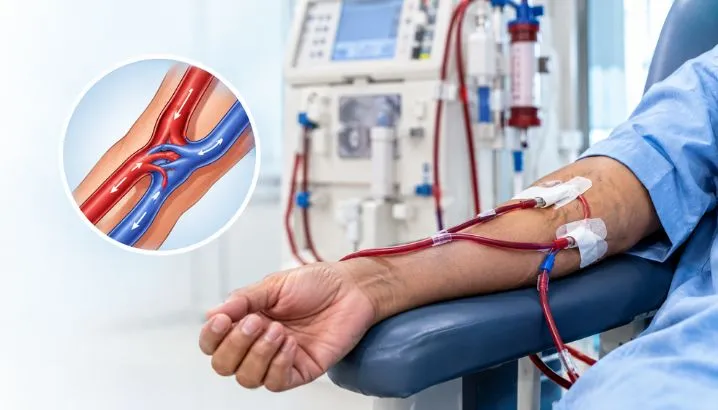
An AV fistula is a surgically created connection between an artery and a vein, usually in the arm.
The increased blood flow from the artery causes the vein to become wider and stronger over time. This makes the vein more suitable for repeated needle placement during hemodialysis treatment.
During dialysis, one needle allows blood to travel from your body to the dialysis machine, while another returns the cleaned blood to you.
The fistula essentially creates a durable pathway through which your blood can safely move to and from the dialysis machine.
If you want to see how this fits into the broader hemodialysis process, from access creation through the treatment itself, Hemodialysis vs Peritoneal Dialysis: Which Is Better? covers how the two main dialysis methods compare and what each actually involves day to day.
Why is the fistula created before dialysis starts?
The main reason is maturation.
A newly created fistula isn't immediately ready for regular dialysis in most patients. The vein needs time to enlarge and strengthen because it will later be exposed to repeated needle punctures and the high blood flow required for dialysis.
The exact time varies from person to person. Some fistulas mature adequately within weeks, while others need longer or require additional assessment or treatment.
This is why your kidney doctor may recommend creating the access before you actually need your first dialysis session.
Does having a fistula mean I need dialysis immediately?
No. Having a fistula created does not by itself mean that dialysis has to begin immediately.
Kidney disease can progress at different rates. Your nephrologist decides when dialysis is medically required based on your kidney function, symptoms, fluid balance and overall health.
The reason for planning the fistula early is to avoid being forced to start dialysis with an emergency temporary catheter if dialysis becomes necessary before the fistula is ready.
Early planning gives the access time to mature instead of waiting until dialysis becomes urgent. NIDDK's guidance on hemodialysis covers this same timing principle in more detail, including why the access procedure itself is generally minor even though the planning around it matters so much.
Why is an AV fistula usually preferred over a dialysis catheter?
For patients who are suitable for one, an AV fistula is generally preferred for long-term hemodialysis because it uses the patient's own blood vessels and tends to have better long-term performance.
Compared with a catheter, a fistula generally has:
- Lower infection risk
- Lower risk of clotting
- Better blood flow for dialysis
- Longer functional life in many patients
- No external tube coming out of the chest or neck
The National Kidney Foundation and NIDDK identify the fistula as the preferred access for many patients requiring long-term hemodialysis.
A catheter can still be necessary, particularly when dialysis needs to begin urgently or when a fistula or graft isn't suitable.
What is the difference between a fistula, graft and catheter?
These are the three main forms of dialysis access.
AV fistula
Your own artery and vein are surgically connected. The vein gradually becomes stronger and larger for dialysis use.
AV graft
A synthetic tube is used to connect an artery and vein. A graft may be considered when your own blood vessels aren't suitable for a fistula.
Dialysis catheter
A soft tube is placed into a large vein, commonly in the neck or chest. It can often be used quickly, which makes it useful when dialysis needs to start without enough time for a fistula to mature.
However, catheters generally carry a higher infection risk and are usually considered a temporary option when possible.
How do I know whether my blood vessels are suitable?
A proper vascular assessment helps determine whether a fistula is likely to work well.
Before surgery, I may assess:
- The size and quality of your veins
- Arterial blood flow
- Previous procedures or injuries
- Which arm is most suitable
- Your overall vascular health
- Your future dialysis requirements
Ultrasound or vascular mapping may be used to examine the blood vessels before creating the access.
The goal isn't simply to create a fistula. The goal is to create an access that can mature properly and provide reliable blood flow for your future treatment.
How long does an AV fistula take to become ready?
A fistula usually needs several weeks to mature, and some patients require several months before it is suitable for use.
The access team checks whether the vein has developed adequately and whether blood is flowing properly.
If the fistula doesn't mature as expected, further testing or a procedure may sometimes be needed to improve its function.
Don't assume that a fistula is ready simply because the surgical wound has healed. Maturation and wound healing are different things.
What does an AV fistula feel like after it is created?
You may notice a vibration or buzzing sensation over the fistula. This is called a thrill and is produced by blood flowing through the connection.
Your dialysis team can teach you how your normal fistula should feel.
If that usual vibration suddenly disappears or changes, contact your dialysis team promptly because it may indicate a blood-flow problem.
How should I protect my fistula before and during dialysis?
Protecting the arm helps preserve the blood vessels and the access.
I advise patients to follow the instructions given by their dialysis and vascular teams. General precautions include:
- Avoid unnecessary blood draws from the fistula arm.
- Avoid blood-pressure cuffs on that arm unless your medical team specifically advises otherwise.
- Don't allow an IV line to be placed in the access arm without medical guidance.
- Don't put prolonged pressure on the fistula.
- Keep the area clean.
- Check regularly for redness, swelling, pain or unusual changes.
- Learn how your normal thrill feels.
The National Kidney Foundation specifically advises protecting the access arm from unnecessary blood draws, IV lines and blood-pressure measurements.
What problems can happen with an AV fistula?
A fistula is generally a preferred long-term access, but it isn't completely free from complications.
Possible problems include:
- Failure to mature
- Narrowing of the blood vessel
- Blood clotting
- Infection
- Bleeding
- Reduced blood supply to the hand in uncommon cases
- Swelling or other access-related problems
A change in the usual vibration, new swelling, persistent bleeding, redness, warmth, pain or discharge should not be ignored. Early assessment may help protect the access.
What should I do if I don't have enough time for a fistula to mature?
A temporary dialysis catheter may be needed when hemodialysis has to start before a fistula is ready.
This doesn't mean that a catheter is always the wrong choice. It can be an important option when dialysis is urgent or when a fistula cannot be used.
If long-term hemodialysis is expected, your medical team may later transition you to a mature fistula or graft when appropriate.
Can I continue normal activities with a fistula?
Yes, many people continue working and performing everyday activities after their fistula has healed.
The type of work and exercise you do matters. Activities involving heavy pressure, repeated strain or possible injury to the access arm may need modification.
I recommend asking your vascular and dialysis team which activities are safe for your particular fistula rather than following a fixed rule for everyone.
Is AV fistula surgery suitable for everyone?
No. The decision depends on your blood vessels, medical condition and expected dialysis needs.
Some patients don't have veins or arteries suitable for a fistula and may need an AV graft or another form of access instead.
The best access is the one that provides reliable dialysis while fitting your individual vascular condition and treatment plan.
Kidney Failure Treatment Without Surgery – Is It Possible? addresses a related worry patients often have at this stage, that creating access means "surgery" in the more intimidating sense, and clarifies where a fistula or catheter procedure actually sits on that spectrum.
What should you ask your doctor before fistula surgery?
I encourage patients to ask simple, practical questions such as:
- Which arm will be used?
- Why is this location suitable for me?
- How long might my fistula take to mature?
- When can it be used for dialysis?
- How should I protect the arm?
- Which symptoms should make me call the hospital?
- What happens if the fistula doesn't mature?
- Do I need a temporary catheter while it matures?
These questions can make the process less confusing and help you understand what to expect.
When should I seek urgent help for my fistula?
Certain changes require prompt medical attention.
Seek urgent medical help if you have:
- Heavy or uncontrolled bleeding
- A sudden loss of the usual thrill
- Severe swelling or pain
- Redness, warmth or pus around the access
- Fever or chills associated with possible access infection
- Sudden changes in the hand such as unusual coldness, weakness or severe pain
Don't wait for your next dialysis appointment if you think your access has suddenly stopped working or is bleeding heavily.
Can an AV fistula last for a long time?
Yes, a well-functioning fistula can provide long-term access, although its lifespan varies between patients.
Regular monitoring matters because narrowing, clotting and other problems can develop over time. Detecting these changes early may allow the access team to treat the problem before the fistula stops working.
Can dialysis access problems be treated?
Often, yes. Depending on the problem, your doctor may recommend imaging, medication, angioplasty or another procedure to restore or maintain blood flow.
The treatment depends on what is causing the access problem and how severe it is.
Frequently Asked Questions
1. Why do doctors recommend an AV fistula before dialysis?
An AV fistula needs time to mature before it can usually be used for regular hemodialysis. Creating it early helps ensure that suitable access is available when dialysis becomes necessary.
2. Is an AV fistula better than a catheter?
For suitable patients needing long-term hemodialysis, an AV fistula is generally preferred because it tends to have lower infection and clotting risks and better long-term durability.
3. Can I have an AV fistula even if I haven't started dialysis?
Yes. Planning the fistula before dialysis is often done specifically because the access needs time to mature.
4. Will I need a catheter if I already have a fistula?
Not necessarily. If the fistula has matured and is working well when dialysis begins, it may be used directly. A catheter may be required temporarily if dialysis starts before the fistula is ready.
5. Can I sleep on my fistula arm?
Ask your dialysis team about your specific access, but prolonged pressure on the fistula should generally be avoided. Your team can advise you on the safest sleeping position.
6. Can I exercise with an AV fistula?
Many people can exercise after the fistula has healed, but the type and intensity should match your condition. Activities that place direct pressure or injury risk on the access arm may need modification.
7. What happens if my fistula doesn't mature?
Your doctor may investigate the blood flow and anatomy to identify the reason. In some cases, an additional procedure can help, while another access option may be needed if maturation isn't possible.
8. Can an AV fistula get blocked?
Yes, narrowing or clotting can reduce or stop blood flow through a fistula. A sudden change in its usual vibration should be reported promptly.
9. Is fistula surgery a major operation?
AV fistula creation is generally a relatively small vascular procedure and is often performed without a prolonged hospital stay, but the exact approach depends on your health and the type of fistula required.
10. Can I protect the veins in my arm before fistula surgery?
Yes. Tell healthcare professionals which arm may be used for future dialysis access and avoid unnecessary blood draws, IV lines and blood-pressure cuffs on that arm when advised by your kidney or vascular team.
Consult a Vascular Specialist About Your Dialysis Access
If you've been advised to create a fistula before dialysis, an individual vascular assessment can help determine the most suitable access for you. You can consult Dr. Pranjal Sawant, Vascular Surgeon, at Lokmanya Hospitals' Vascular Surgery department, Pune, to discuss your blood vessels, fistula planning and long-term dialysis access needs.
Final Thoughts
An AV fistula is created before dialysis because it needs time to mature and become strong enough for repeated hemodialysis access.
Planning the access early can help you avoid an unplanned start with temporary access when dialysis becomes necessary.
At the same time, a fistula isn't suitable for every patient, so the decision should always be based on your blood vessels, kidney disease and expected treatment needs.
Medical Disclosure
This article is for general educational purposes only. It does not replace an individual medical consultation, physical examination, diagnosis or personalized treatment plan from a qualified healthcare professional.

Dr. Pranjal Melge
- MBBS, DNB (General Surgery), DrNB (Vascular Surgery)
Consultant Vascular & Endovascular Surgeon