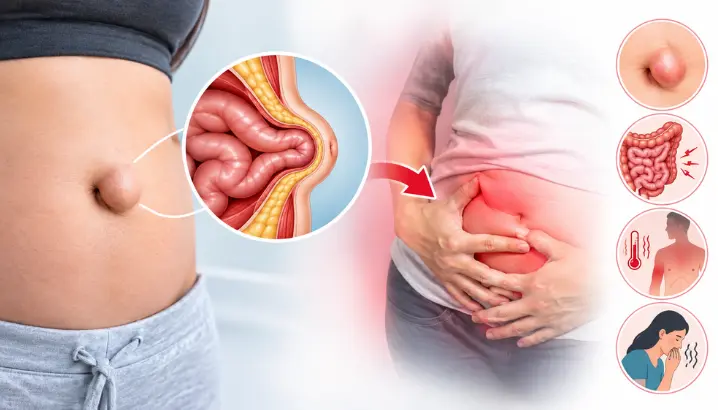
When Does an Umbilical Hernia Become Dangerous?
Category: General Surgery
 Mon Sep 21 2026


A small bulge around your belly button may look harmless, but an umbilical hernia can become serious if the tissue inside it gets trapped or loses its blood supply.
I’m Dr. Suprashant Kulkarni, Consultant General Surgeon at Lokmanya Hospitals in Pune, and I often explain to patients that a strangulated umbilical hernia is an emergency, but not every umbilical hernia is dangerous. The important thing is knowing which warning signs should not be ignored.
Key Takeaways
- Most small, painless hernias are not immediate emergencies.
- Sudden pain, vomiting, a firm or discoloured bulge, or inability to pass stool or gas needs urgent assessment.
- An incarcerated hernia can become strangulated if its blood supply is cut off.
- Treatment depends on the hernia's size, symptoms, reducibility, contents, and your overall health.
- A proper examination by a general surgeon helps decide whether observation or repair is appropriate.
What exactly is an umbilical hernia?
An umbilical hernia is a weakness or opening in the abdominal wall near the belly button through which fat or part of the intestine can bulge.
You may notice a soft lump that becomes more visible when you cough, strain, stand, or lift something. Some people have no pain, while others feel pressure, discomfort, or aching around the navel.
In adults, factors such as excess abdominal pressure, obesity, pregnancy, abdominal fluid buildup, or previous abdominal surgery can contribute to a hernia.
When does an umbilical hernia become dangerous?
It becomes dangerous when the tissue inside the hernia becomes trapped or its blood supply is compromised.
I usually think about two important complications: incarceration and strangulation.
An incarcerated umbilical hernia is one where the herniated tissue becomes stuck and can't return easily into the abdomen. If the trapped tissue presses on its own blood vessels, the condition can progress to strangulation.
Strangulation is more serious because loss of blood supply can damage or kill the affected bowel tissue. This can lead to infection and requires urgent surgical treatment.
What warning signs mean I should seek emergency care?
Sudden or increasing pain in or around the hernia is one of the most important warning signs.
Please seek urgent medical care if you notice:
- Severe or rapidly worsening abdominal pain
- A bulge that suddenly becomes hard, firm, tender, or cannot be pushed back
- Red, purple, dark, or otherwise discoloured skin over the hernia
- Nausea or repeated vomiting
- Increasing abdominal swelling or bloating
- Inability to pass stool or gas
- Fever or feeling increasingly unwell
These symptoms can occur with bowel obstruction, incarceration, or strangulation.
Don't wait for the pain to become unbearable if several of these symptoms appear together. Go to an emergency department promptly.
What is the difference between a reducible and trapped hernia?
A reducible hernia is one where the bulging tissue can return into the abdomen, either naturally when you lie down or with gentle pressure during a medical examination.
A trapped hernia doesn't move back into the abdomen. This can indicate incarceration, especially when the lump becomes painful, firm, or increasingly swollen.
Don't repeatedly force a painful or hard lump back yourself. If the hernia has become trapped, it needs medical assessment rather than home treatment.
How do I know whether my hernia needs treatment now?
The decision depends on more than the size of the lump.
During an examination, I look at:
- Whether the hernia is reducible
- Whether you have pain or discomfort
- Whether the lump is increasing in size
- What tissue may be inside the hernia
- Whether there are signs of obstruction or compromised blood supply
- Your general health and surgical risk
A physical examination can often identify an umbilical hernia. If there is uncertainty or concern about complications, an ultrasound or CT scan may be considered.
Can a painless umbilical hernia still require surgery?
Yes, a painless hernia can still need planned surgical repair, particularly in adults.
A small, reducible and comfortable hernia may sometimes be monitored after discussion with a surgeon. However, adult umbilical hernias generally don't close by themselves, and some become larger or symptomatic over time.
This is why I don't recommend judging the need for treatment only by pain. The structure of the hernia and your individual risk matter too.
If you are looking for umbilical hernia treatment in Pune, an assessment can help determine whether observation or planned repair is more appropriate for you.
What does surgery for an umbilical hernia involve?
Surgery repairs the weakness in the abdominal wall and returns the herniated tissue to its proper position.
Depending on the hernia and your individual situation, repair may be performed through an open approach or a minimally invasive technique.
MedlinePlus's overview of umbilical hernia repair walks through both approaches step by step, including how mesh is placed, if you want to understand the procedure itself before your consultation.
The abdominal wall defect may be closed with sutures, and mesh may be used in selected adult hernias to strengthen the repair. Is Mesh Necessary in Hernia Surgery? goes deeper into when mesh is actually needed versus when a hernia can be closed without it, if that's a decision you're weighing.
The choice isn't the same for everyone. I consider the defect size, location, abdominal wall condition, previous operations, general health, and whether the hernia is complicated.
What happens if I keep delaying treatment?
A hernia that is currently comfortable may remain stable, but it can also enlarge or become painful and, in some cases, develop complications.
Waiting becomes particularly concerning when the lump is getting bigger, becomes difficult to reduce, or starts causing persistent symptoms.
The biggest mistake is waiting at home after emergency warning signs appear. An obstructed or strangulated hernia may require urgent surgery, and treatment should not be delayed.
Can lifestyle changes repair an umbilical hernia?
Lifestyle measures can reduce strain on the abdominal wall, but they don't close the existing hernia defect.
Maintaining a healthy weight, managing constipation, treating a persistent cough, and avoiding unnecessary strain may help reduce abdominal pressure.
However, these measures shouldn't be presented as a replacement for surgical assessment. There is no reliable home remedy that permanently closes an adult abdominal wall defect.
When should I consider planned hernia surgery?
Planned repair is generally considered when an adult hernia is painful, enlarging, affecting daily activities, difficult to reduce, or judged to have a reason for repair after assessment.
Surgery is especially urgent when there is suspected incarceration, obstruction, or strangulation.
If the hernia is small and causes no symptoms, the decision may be more individualised. I discuss the benefits and risks of umbilical hernia surgery with each patient rather than recommending the same approach to everyone.
What can I do to protect myself while I have a hernia?
Work with your doctor on weight management if needed. Prevent persistent constipation and straining. How to Relieve Hernia Pain? covers these interim comfort measures in more depth, while making the same point this piece does: they manage symptoms, they don't replace a surgical assessment.
Until you're assessed:
- Avoid activities that consistently cause pain or marked bulging.
- Work with your doctor on weight management if needed.
- Prevent persistent constipation and straining.
- Get a chronic cough evaluated.
- Don't rely on a belt, tape, coin, or home remedy to repair the defect.
- Seek urgent care if the lump becomes painful, hard, discoloured, or associated with vomiting or inability to pass stool or gas.
The aim isn't to make you afraid of your hernia. It is to help you recognise the difference between a hernia that needs planned care and one that needs immediate attention.
FAQs
Is an umbilical hernia always an emergency?
No, most umbilical hernias are not emergencies. A soft, reducible, painless lump without other symptoms can often be assessed through a planned consultation.
Can an umbilical hernia become an emergency suddenly?
Yes, complications can develop when the hernia becomes trapped and its blood supply is compromised. Sudden pain, vomiting, firmness, discoloration, or bowel obstruction symptoms require urgent assessment.
Can I live with an umbilical hernia without surgery?
Some small, reducible and symptom-free adult hernias may be monitored after medical assessment. I would still recommend having the hernia examined so that you understand its size, contents, and potential treatment needs.
What happens if an umbilical hernia is not treated?
An untreated adult hernia may stay stable, but it can also enlarge, become painful, or develop complications. The risk is different for every patient, so the decision to monitor or repair should be individualised.
Can an umbilical hernia burst?
A hernia doesn't usually “burst” in the way people often imagine. The concern is that bowel or other tissue can become trapped, obstructed, or lose its blood supply, which requires urgent medical treatment.
Can coughing make an umbilical hernia worse?
Repeated coughing can increase pressure inside the abdomen and may make the bulge more noticeable or contribute to progression. If you have a persistent cough along with a hernia, I recommend treating the cough rather than ignoring it.
Is a hard umbilical hernia dangerous?
A newly hard, tender, or irreducible lump should be assessed urgently. It can indicate that the hernia contents are trapped, particularly if you also have pain, vomiting, or abdominal swelling.
Can I exercise with an umbilical hernia?
Exercise may be possible, but the type and intensity should be appropriate for your condition. I advise avoiding activities that cause pain or excessive bulging until your hernia has been assessed.
Does losing weight make an umbilical hernia disappear?
Weight loss can reduce abdominal pressure and may improve surgical risk in some patients, but it doesn't close an existing hernia defect. A surgeon should still assess the hernia itself.
Is surgery necessary if my umbilical hernia doesn't hurt?
Not every painless hernia needs emergency surgery, but an adult hernia should still be assessed. The decision depends on its size, reducibility, progression, symptoms, and your overall health.
When should I see a doctor for a small belly-button lump?
You should arrange a medical assessment if you notice a new or persistent lump around your belly button. Early assessment helps distinguish an uncomplicated hernia from a problem that needs more urgent treatment.
Can an umbilical hernia cause bowel blockage?
Yes, bowel can become trapped inside a hernia and cause obstruction. Symptoms may include abdominal pain, vomiting, bloating, and inability to pass stool or gas, which require urgent medical evaluation.
If you have a new, painful, enlarging, or difficult-to-reduce umbilical hernia, I recommend consulting Dr. Suprashant Kulkarni, Consultant General Surgeon, at Lokmanya Hospitals in Pune for an individual assessment. If you have sudden severe pain, vomiting, a discoloured or firm lump, or cannot pass stool or gas, seek emergency medical care rather than waiting for a routine appointment.
Final Thoughts
An umbilical hernia isn't automatically dangerous, but certain changes can make it an emergency. The key is not to ignore a new or changing lump and to understand the warning signs of incarceration, obstruction, and strangulation.
The right treatment depends on your individual hernia, not simply on how it looks. A proper surgical assessment can help you decide whether monitoring or planned repair is appropriate.
Medical Disclosure
This article is intended for general educational purposes only. It does not replace an individual medical consultation, physical examination, diagnosis, or personalised treatment plan from a qualified healthcare professional.

Dr. Suprashant Kulkarni
- MBBS | MS (General Surgery) | FICS | FALS | FACRSI | FMAS | FIAGES
Senior Consultant & Head - Department of General GI, MIS & Robotic Surgery