What Is the Difference Between Cancer Stages 1, 2, 3 and 4?
Category: Blogs
 Tue Sep 22 2026


Hearing the words “Stage 1,” “Stage 2,” “Stage 3,” or “Stage 4” after a cancer diagnosis can be frightening, but these numbers have a specific medical meaning.
I’m Dr. Shriniwas Kulkarni, Medical Oncologist, and at Lokmanya Hospitals in Pune, I often explain that cancer stages mainly tell us how much the cancer has grown and whether it has spread.
The stage helps guide treatment, but it doesn't tell the complete story about an individual patient.
Key Takeaways
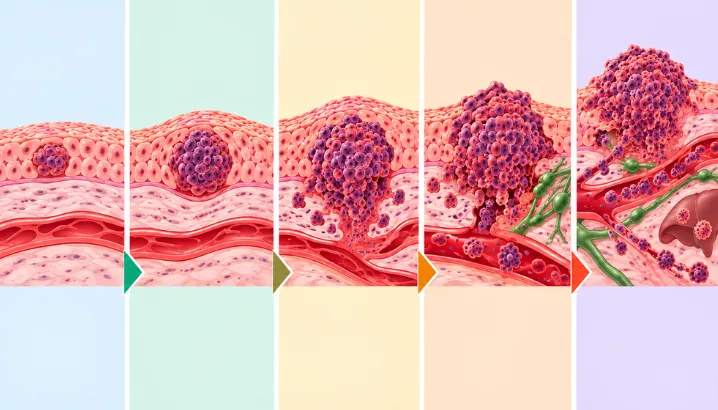
- Stage 0 means abnormal cells are still limited to their original layer.
- Stages 1 and 2 usually describe cancer that is still local or has limited local involvement.
- Stage 3 generally involves more extensive local or nearby lymph-node spread.
- Stage 4 means the cancer has spread to distant parts of the body.
- Cancer type, TNM findings, grade, biomarkers, overall health, and treatment response also matter.
What does a cancer stage actually tell you?
Cancer stage describes the extent of cancer in the body, including the size of the tumour and whether it has spread.
For many solid cancers, doctors use the TNM staging system. The three letters represent:
- T, Tumour: size and local growth of the main tumour
- N, Nodes: whether nearby lymph nodes contain cancer
- M, Metastasis: whether cancer has spread to distant parts of the body
For an independent government reference covering the same system in more depth, including how it differs across cancer types, the National Cancer Institute's overview of cancer staging is a solid next read.
These findings are combined to assign an overall stage. The exact rules differ between cancer types.
This is why you shouldn't compare Stage 2 breast cancer directly with Stage 2 lung or colon cancer. Each cancer has its own staging rules.
What does Stage 0 cancer mean?
Stage 0 usually means abnormal cells are confined to the layer where they first developed and haven't invaded nearby tissue.
You may hear the term carcinoma in situ. It is often considered a very early form of disease or a precancerous change, depending on the cancer type.
Treatment at this stage can be highly effective, but the appropriate approach depends on the organ involved and the specific abnormality.
What is Stage 1 cancer?
Stage 1 generally means the cancer is relatively small and remains localized to the organ where it started.
When patients ask me, “What is Stage 1 cancer?”, I explain that this usually represents an early stage, but the exact definition depends on the type of cancer.
For some cancers, tumour size is a major factor. For others, depth of invasion, lymph-node findings, tumour biology, or other features can change the stage.
A Stage 1 diagnosis does not mean that every patient receives the same treatment. Surgery, radiation, systemic treatment, or a combination may be considered depending on the cancer.
What changes in Stage 2 cancer?
Stage 2 generally means the cancer is larger or has grown further into nearby tissue, but it hasn't spread to distant organs.
The exact boundary between Stage 1 and Stage 2 varies considerably between cancers.
For example, in some cancers, a larger tumour can move the disease into Stage 2 even when lymph nodes are negative. In others, limited nearby lymph-node involvement may contribute to Stage 2.
So, the difference between Stage 2 and Stage 3 cancer cannot be determined simply by looking at tumour size. Your pathology and staging reports need to be interpreted together.
What does Stage 3 cancer mean?
Stage 3 usually indicates more locally advanced disease, often involving nearby tissues, structures, or regional lymph nodes, but without distant metastasis.
This stage can include several different situations. The tumour may have grown deeper, involved surrounding structures, or spread to regional lymph nodes.
Some cancers divide Stage 3 into Stage 3A, 3B, or 3C, depending on the extent of disease.
Treatment may involve more than one method. Depending on the cancer, doctors may use chemotherapy, radiation therapy, surgery, targeted therapy, immunotherapy, or combinations of these approaches.
What does Stage 4 cancer mean?
Stage 4 means the cancer has spread from its original site to distant parts of the body. This is called metastatic cancer.
For example, a cancer that began in one organ may later be found in the liver, lungs, bones, brain, or another distant site. The exact pattern depends on the type of cancer.
When patients ask, “Is Stage 4 cancer curable?”, I explain that the answer depends heavily on the cancer type, molecular characteristics, location and extent of spread, overall health, and response to treatment.
Stage 4 is advanced cancer, but it should not be interpreted as an automatic prediction of how long a person will live. Treatment may aim to control the disease, reduce symptoms, prolong life, and in selected situations achieve long-term remission.
How do doctors decide which cancer stage you have?
Doctors determine stage using a combination of examination, imaging, pathology, and other tests appropriate to the cancer.
Depending on the situation, this may include:
- Biopsy and pathology testing
- CT or MRI scans
- PET imaging in selected cancers
- Ultrasound
- Blood tests
- Lymph-node assessment
- Molecular or biomarker testing when relevant
The purpose is to determine the tumour's local extent, check nearby lymph nodes, and look for distant spread.
Since staging depends so heavily on correct imaging interpretation, Radiology Second Opinion in Pune: How to Get One is worth knowing about if you want an imaging finding reviewed by a subspecialty radiologist before it shapes a major treatment decision.
A staging scan is not simply a test to “find cancer.” It helps doctors understand where the cancer is and plan treatment accordingly.
Is cancer stage the same as cancer grade?
No, cancer stage and cancer grade are different.
Stage tells us where the cancer is and how far it has spread. Grade describes how abnormal the cancer cells look under a microscope and can provide information about how aggressively they may behave.
You may therefore see both stage and grade mentioned in your pathology report. I advise patients not to interpret either number on its own.
Does a higher stage always mean a worse outcome?
A higher stage generally means the cancer has spread further, but stage alone cannot predict an individual's outcome.
I also consider the cancer type, tumour biology, genetic or molecular markers, grade, overall health, response to treatment, and available treatment options.
Modern cancer treatment is increasingly personalised. Two people with the same stage can have different treatment plans because their cancers may behave differently.
How does the stage affect cancer treatment?
Cancer stage is one of the main factors used to plan treatment, but it is not the only factor.
Depending on the cancer, treatment may include:
- Surgery to remove the tumour
- Chemotherapy to destroy or control cancer cells
- Radiation therapy to treat specific areas
- Targeted therapy for cancers with suitable molecular changes
- Immunotherapy to help the immune system attack cancer
- Hormone therapy for selected hormone-sensitive cancers
- Supportive or palliative treatment to control symptoms and maintain quality of life
What Is Colorectal Cancer? shows what this actually looks like for one specific cancer, how stage and pathology together determine whether a patient gets surgery alone or a combination of these approaches.
The combination and sequence depend on the individual cancer.
If you are looking for cancer treatment in Pune, the important first step is not simply asking which stage is “best” or “worst.” It is understanding your exact diagnosis, stage, pathology and treatment options.
Can cancer stage change after diagnosis?
The original cancer stage generally remains the stage assigned at diagnosis, even if the cancer later spreads or comes back.
Doctors document new information separately, such as recurrence or progression. This helps maintain a clear record of how the disease has behaved over time.
This can be confusing for families, especially when a scan later shows new disease. I recommend asking your oncologist whether the new finding represents progression, recurrence, or another change rather than assuming that the original stage has simply been renumbered.
Why shouldn't you judge your prognosis from the stage alone?
Your stage is important, but it is only one part of your cancer assessment.
I look at the complete picture, including:
- Exact cancer type
- TNM findings
- Pathology and tumour grade
- Molecular or biomarker results when relevant
- Number and location of affected sites
- General health and fitness
- Response to treatment
- Available treatment options
A stage number should help you understand your disease, not make you lose hope. The right interpretation comes from putting the stage together with the biology of your particular cancer.
What should you ask your oncologist after receiving a cancer stage?
Ask for the exact diagnosis rather than relying only on the stage number.
Useful questions include:
- What type of cancer do I have?
- What is my exact TNM stage?
- Has the cancer spread to lymph nodes?
- Has it spread to distant organs?
- What does my pathology report show?
- Are there biomarkers that affect treatment?
- What is the goal of treatment?
- What treatment options are appropriate for my stage?
- Should I consider a second opinion?
Understanding these answers can make a cancer diagnosis feel more manageable and can help you participate in treatment decisions.
If you have recently received a cancer diagnosis or need help understanding your stage and treatment options, you can consult Dr. Shriniwas Kulkarni, Medical Oncologist, at Lokmanya Hospitals, Pune. Book an Appointment. A personalised oncology assessment can help you understand what your stage means in the context of your specific cancer.
FAQs
Does Stage 4 cancer always mean the cancer is terminal?
No, Stage 4 does not automatically mean that treatment is no longer possible. Some metastatic cancers can be controlled for long periods, and the outlook varies greatly by cancer type and response to treatment.
Can Stage 2 cancer spread to other organs?
Yes, cancer can progress or recur and later spread, although Stage 2 generally describes disease without distant metastasis at the time of staging. Follow-up and treatment recommendations depend on the specific cancer.
Can a cancer patient have Stage 3 without lymph-node involvement?
Yes, depending on the cancer type and staging system. Local tumour size or invasion into nearby structures can contribute to Stage 3 even when regional lymph nodes aren't involved.
Is Stage 1 cancer always cured after surgery?
No, surgery can be curative for many localized cancers, but cure cannot be guaranteed for every patient. The pathology findings and risk of recurrence determine whether additional treatment or follow-up is needed.
Can chemotherapy change the cancer stage?
Treatment can shrink or control cancer, but the original stage at diagnosis is generally retained. Doctors may describe the treatment response separately rather than simply changing the original stage.
Does tumour size alone decide cancer stage?
No, tumour size is only one factor. Lymph-node involvement, local invasion, distant spread, cancer type, and other cancer-specific factors may all affect staging.
Is cancer grade more important than stage?
Neither is universally more important because they answer different questions. Stage describes the extent of disease, while grade describes the appearance and characteristics of cancer cells.
Can two people with the same cancer stage need different treatments?
Yes, they can. Differences in pathology, biomarkers, overall health, tumour location, previous treatment, and other factors may change the recommended treatment.
Does Stage 4 cancer always cause severe symptoms?
No, some people with metastatic cancer may have few symptoms at first. Symptoms depend on where the cancer has spread and how much disease is present.
Should I get a second opinion after a cancer diagnosis?
A second opinion can be useful when you want confirmation of the diagnosis, stage, or proposed treatment plan. I encourage patients to ask questions and understand their options before making important treatment decisions.
Final Thoughts
Cancer staging helps doctors understand how far a cancer has grown or spread, but a stage number is not the whole diagnosis. Stage 1, 2, 3 and 4 represent different levels of disease extent, while the exact meaning varies by cancer type.
Don't judge your treatment options or prognosis from the stage number alone. Your pathology, tumour biology, overall health and response to treatment all matter when deciding the right approach for you.
Medical Disclosure
This article is intended for general educational purposes only. It does not replace an individual medical consultation, physical examination, diagnosis, pathology review, or personalised cancer treatment plan from a qualified healthcare professional.

Dr. Shriniwas Kulkarni
- MBBS, DNB (General Medicine), DrNB / DNB (Medical Oncology)
Sr Consultant Medical Oncologist