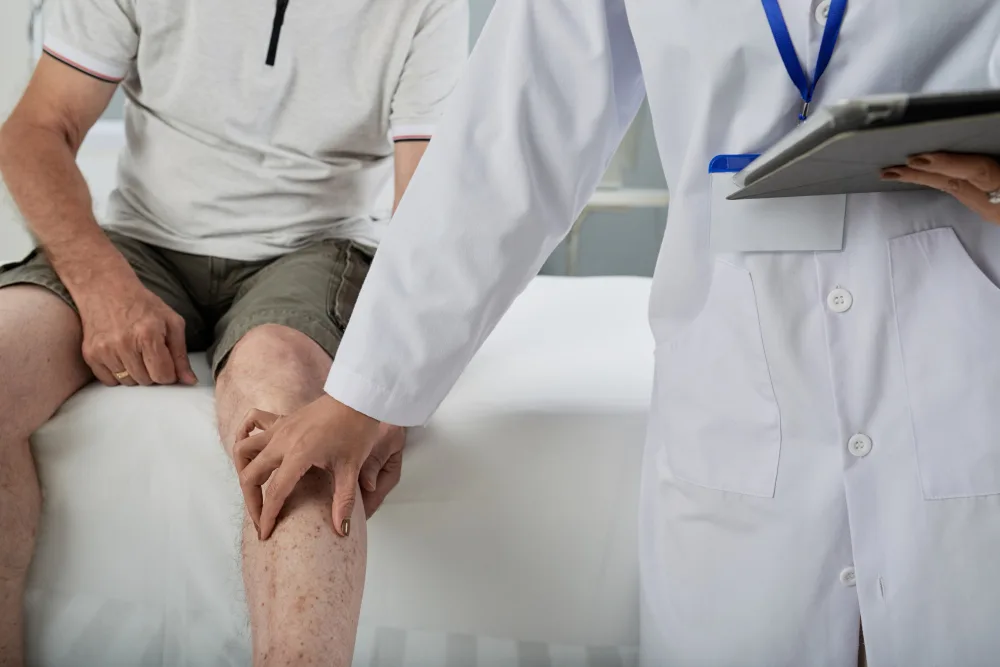
What is knee surgery?
Category: Orthopedics
 Tue Nov 11 2025


Knee surgery is a medical procedure performed to repair, replace, or reconstruct damaged structures within the knee joint. It is commonly recommended for patients suffering from severe arthritis, ligament injuries, cartilage damage, or chronic knee pain that does not improve with medication or physiotherapy. The goal of knee surgery is to relieve pain, restore mobility, and improve the overall quality of life.
At Lokmanya Hospitals, patients receive advanced orthopedic care and comprehensive knee treatments. As one of the leading hospitals for knee surgery in Pune, Lokmanya Hospitals combines cutting-edge technology, experienced surgeons, and personalized rehabilitation programs to ensure safe, precise, and long-lasting recovery.
Understanding Knee Surgery
Knee surgery can be minimally invasive or open, depending on the severity of the damage. During the procedure, orthopedic surgeons repair or replace damaged tissues, ligaments, or bone surfaces to restore smooth joint movement. The surgery is performed under anesthesia and typically followed by a structured physiotherapy plan to ensure complete recovery.
Modern techniques, such as arthroscopic knee surgery and robot-assisted joint replacement, have made procedures more precise and recovery faster. These innovations minimize pain, reduce hospital stay, and help patients return to their normal routines within weeks.
Types of Knee Surgery
Knee surgery is often recommended when conservative treatments fail to relieve pain or restore function. The type of surgery depends on the severity of the joint damage, the patient’s age, activity level, and overall health. Here’s a detailed explanation of each type of knee surgery:
1. Arthroscopic Knee Surgery
Arthroscopic surgery is a minimally invasive procedure in which a small camera (arthroscope) is inserted into the knee through tiny incisions. This allows the surgeon to visualize the joint and perform repairs, such as removing torn cartilage, trimming damaged tissue, or repairing minor ligament injuries. The advantages include reduced pain, shorter recovery time, and smaller scars compared to traditional open surgery.
2. Partial Knee Replacement
Partial knee replacement involves replacing only the damaged portion of the knee while preserving the healthy bone, cartilage, and ligaments. This procedure is typically recommended for patients with localized arthritis affecting one compartment of the knee. Benefits include faster recovery, more natural knee movement, and preservation of bone and ligaments, making it less invasive than total knee replacement.
3. Total Knee Replacement
Total knee replacement (TKR) is performed when advanced arthritis or severe joint damage affects the entire knee. In this procedure, the surgeon removes the damaged bone and cartilage and replaces the joint surfaces with artificial implants made of metal and plastic. TKR relieves pain, restores joint function, and improves mobility in patients with extensive knee degeneration, providing long-term relief.
4. Ligament Reconstruction (ACL/PCL Surgery)
Ligament reconstruction is performed to repair or replace damaged ligaments, most commonly the anterior cruciate ligament (ACL) or posterior cruciate ligament (PCL). Using grafts from the patient’s own tissue or a donor, the surgeon reconstructs the ligament to restore knee stability. This surgery is essential for patients experiencing frequent knee instability, especially athletes or physically active individuals, to prevent further joint damage.
5. Cartilage Restoration Surgery
Cartilage restoration surgery is aimed at repairing or regenerating damaged cartilage in the knee, which acts as a cushion between bones. Techniques may include microfracture surgery, autologous chondrocyte implantation, or osteochondral grafts. The goal is to reduce pain, improve joint cushioning, and slow the progression of arthritis, particularly in younger patients or those with localized cartilage defects.
When is Knee Surgery Recommended?
- Severe knee pain limiting daily activities
- Persistent swelling or stiffness despite medication
- Advanced osteoarthritis or rheumatoid arthritis
- Sports injuries causing ligament tears
- Failure of non-surgical treatments like physiotherapy
Recovery After Knee Surgery
Recovery depends on the type of surgery performed. Most patients begin physiotherapy within 24–48 hours post-surgery. Regular exercises, medication, and follow-up appointments are crucial to ensure proper healing. With expert care and adherence to a rehabilitation plan, patients can expect to regain full mobility within 6–12 weeks.
Why Choose Lokmanya Hospitals for Knee Surgery?
Lokmanya Hospitals is one of the top orthopedic centers for knee surgery in Pune, offering world-class facilities and a team of highly experienced orthopedic and arthroscopic surgeons. The hospital specializes in both minimally invasive and robotic knee procedures, ensuring high precision, minimal pain, and faster recovery.
With a focus on personalized care, Lokmanya Hospitals provides pre-surgery counseling, advanced imaging diagnostics, and post-surgery rehabilitation programs. The team’s commitment to safety, innovation, and patient satisfaction makes Lokmanya Hospitals a trusted destination for individuals seeking reliable knee care and lasting results.
Conclusion
Knee surgery is a transformative solution for those suffering from chronic pain, joint damage, or mobility issues. With advancements in surgical techniques and personalized recovery programs, patients can expect long-term relief and improved movement.
At Lokmanya Hospitals, expert surgeons, modern technology, and comprehensive rehabilitation ensure that every patient receives the highest quality care. Whether it’s a ligament repair, partial replacement, or total knee replacement, Lokmanya Hospitals delivers excellence at every step of the journey.
FAQs
1. What is knee surgery?
Knee surgery is a procedure to repair or replace damaged parts of the knee joint to relieve pain and restore function.
2. When is knee surgery needed?
It is recommended for severe arthritis, ligament injuries, cartilage damage, or persistent pain unresponsive to medication.
3. How long does recovery take after knee surgery?
Most patients recover within 6–12 weeks, depending on the type of surgery and physiotherapy plan.
4. Is knee surgery painful?
With modern anesthesia and minimally invasive methods, discomfort is significantly reduced.
5. What are the risks of knee surgery?
Infection, stiffness, or temporary swelling are possible but rare when treated in advanced hospitals.
6. Can knee surgery be done using minimally invasive techniques?
Yes, arthroscopic and robotic-assisted surgeries offer smaller incisions, less pain, and faster recovery.
7. Why choose Lokmanya Hospitals for knee surgery in Pune?
Because it combines advanced technology, skilled surgeons, and comprehensive rehabilitation for superior results.
8. Will I need physiotherapy after knee surgery?
Yes, physiotherapy is essential for restoring strength, mobility, and flexibility after surgery.
Previous blog

Which Vitamin Deficiency Causes Mouth Ulcers?
Next blog
.webp)