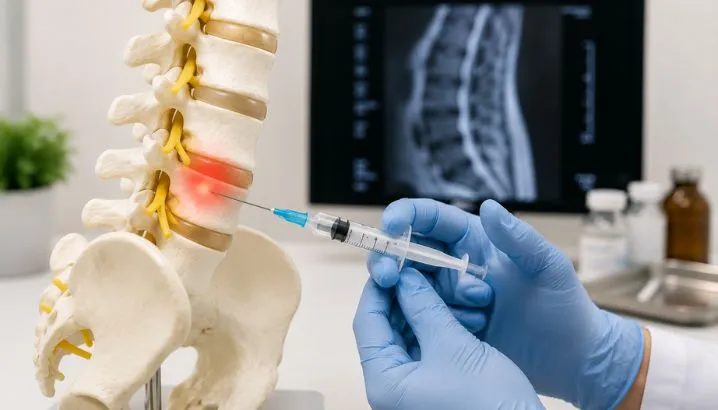
Do Injections Really Help with Lower Back Pain?
Category: Spine
 Thu Aug 20 2026


Patients often come to me expecting one of two things, either injections are a magic fix, or they're a waste of time.
Neither is quite right. I'm Dr. Pallav Bhatia, Consultant Minimally Invasive & Endoscopic Spine Surgeon at Lokmanya Hospitals, Pune, and if you're considering spinal injections for lower back pain in Pune, you deserve an honest picture, not a sales pitch, of what they can and can't do.
Key Takeaways
- Injections can offer real short-term relief, especially for nerve-related pain, but they're not a permanent cure for most patients
- They also help identify exactly which structure is causing your pain
- There's a practical limit to how often you can safely get them
- They can sometimes delay or even avoid surgery, but that outcome varies person to person
- Understanding the honest evidence helps you decide if this is the right next step for you
Do Injections Really Help with Lower Back Pain, or Is It Overhyped?
The honest answer is: it depends on the cause of your pain and what you're expecting from the injection.
- A well-known 2020 systematic review of 25 randomized trials found epidural steroid injections were only marginally better than placebo for reducing leg pain in the short term, and long-term benefit for chronic low back pain wasn't clinically meaningful on its own
- That doesn't mean injections are useless, many patients do get genuine, functional relief, especially when the pain is nerve-related (like sciatica) rather than purely mechanical back pain
- Other clinical studies looking at pain scores and disability indices have shown meaningful improvement at 12 weeks in appropriately selected patients
- The real answer isn't yes or no, it's "for the right patient, at the right time, injections genuinely help"
What Exactly Happens During a Spinal Injection?
A spinal injection delivers anti-inflammatory medication directly to the area causing your pain, guided by imaging for precision.
- An epidural steroid injection places medication into the epidural space around irritated spinal nerves, reducing inflammation and nerve sensitivity.
- If you want a plain-English reference on how this procedure works beyond what I've covered here, MedlinePlus's overview of epidural injections for back pain walks through the mechanics step by step.
- A nerve block targets a specific nerve to interrupt the pain signal, and can also help confirm exactly where your pain is coming from
- Facet joint injections target the small joints between vertebrae when those, rather than a disc or nerve, are the source of pain
- These procedures are done under imaging guidance (fluoroscopy or ultrasound) for accuracy, and are typically outpatient, done within 30 to 45 minutes
Who Is Actually a Good Candidate for This?
Not every kind of back pain responds equally well, and that's the honest starting point.
- Patients with sciatica, a herniated disc, or spinal stenosis causing nerve-related leg pain tend to respond best.
- If a herniated disc is what's actually driving your pain, Herniated Disc Treatment In Pune covers the fuller range of options, from conservative care through to when surgery gets considered, so you can see where injections fit into that bigger picture.
- Patients with pure mechanical or muscular back pain, without nerve involvement, often see less benefit from injections
- I typically recommend injections after conservative measures, physiotherapy, medication, activity modification, haven't given adequate relief
- Imaging (MRI) confirming the likely source of pain makes the injection far more targeted and effective than a blind attempt at relief
How Long Does the Relief Actually Last?
This varies widely, and setting the right expectation matters more than the injection itself.
- When effective, relief typically lasts anywhere from a few weeks to about a year, it's rarely permanent
- If the first injection provides good relief, up to three injections may be given within a year, spaced appropriately
- Some patients get lasting relief that allows their body to heal during the pain-free window, others find the pain returns once the medication's effect wears off
- If an injection gives you zero relief at all, that itself is useful information, it suggests we may be treating the wrong source
Can Injections Help You Avoid Surgery Altogether?
Sometimes, yes, but it's not guaranteed, and that's an important distinction.
- For patients whose pain responds well and stays controlled, injections can meaningfully delay or even eliminate the need for surgery
- For patients with structural problems like significant nerve compression causing weakness, injections may help temporarily but won't fix the underlying mechanical issue
- I use response to injections partly as a diagnostic clue, if you get excellent but short-lived relief, it often confirms surgery would target the right structure if symptoms persist
- Minimally invasive spine surgery becomes the more durable option when the underlying structural cause needs to be corrected, not just calmed
What Are the Risks and Limits You Should Know?
Spinal injections are generally safe, but they're not risk-free, and they're not infinite.
- Common, temporary side effects include soreness at the injection site, brief flushing, or mild blood sugar elevation in diabetics
- Serious complications are rare but include infection, bleeding, or nerve irritation, this is why imaging guidance and proper technique matter
- Repeated frequent steroid injections over years can have cumulative effects on bone density and local tissue, which is part of why we limit frequency
- If pain keeps returning despite repeated injections, that's usually a sign to reassess with your surgeon rather than repeat the same approach indefinitely
What Should You Expect After the Procedure?
Most patients go home the same day and resume light activity within 24 to 48 hours.
- Some soreness at the injection site for a day or two is normal
- Pain relief may take a few days to fully set in as inflammation settles
- Physiotherapy alongside the injection often improves and extends the results. Can Physiotherapy Cure Sciatica? goes into why pairing the two works better than either alone, and what that combined approach actually looks like week to week.
- Follow-up with your surgeon helps determine whether further injections, a change in approach, or surgical evaluation makes sense next
If lower back or leg pain has been limiting your daily life and you want an honest assessment of whether injections, physiotherapy, or a more definitive procedure fits your case, I see patients for spine consultations at Lokmanya Hospitals, Pune.
Final Thoughts
Spinal injections aren't a miracle cure, and they aren't a waste of time either, they're a genuinely useful tool for the right patient, particularly when nerve-related pain is involved.
The evidence supports real short-term relief and, for some, a meaningful window to heal or avoid surgery.
What matters most is an accurate diagnosis first, injections work best when they're targeted, not tried as a first blind option.
If you're weighing this decision, an honest conversation about your specific imaging and symptoms will tell you more than any general answer can.
Frequently Asked Questions
How many epidural injections can you get?
Typically up to three injections within a year if the first one provides good relief, spaced several weeks apart, though this depends on individual response.
Does insurance cover back injections?
Many insurance plans do cover medically indicated spinal injections, but coverage varies by policy, it's worth confirming details with your insurer beforehand.
What happens if injections don't work for back pain?
It usually means either the injection targeted the wrong structure or your pain has a more significant mechanical cause that needs further evaluation, possibly including surgery.
Are back injections painful?
Most patients feel brief discomfort during the injection itself, similar to a strong pinch, followed by mild soreness for a day or two.
Can injections be repeated if the pain comes back?
Yes, within safe limits, though repeated injections without lasting benefit usually prompt a reassessment of the underlying cause.
Do injections work for herniated disc pain?
Often yes, especially when the herniation is irritating a nerve root, injections can reduce inflammation and associated leg pain effectively.
Is recovery time needed after a spinal injection?
Minimal, most patients resume normal light activity within a day or two, with strenuous activity avoided for a short period.
Can diabetics safely get steroid injections?
Generally yes, but steroids can temporarily raise blood sugar, so diabetic patients should monitor levels closely after the procedure.
Do injections treat the underlying cause of back pain?
No, they reduce inflammation and pain, they don't repair a herniated disc or correct spinal structural issues, that's a key distinction from surgery.
How do I know if I need surgery instead of an injection?
If pain persists despite injections and physiotherapy, or if there's progressive weakness or nerve damage, that's when surgical evaluation becomes appropriate.
Need an Honest Assessment for Your Back Pain?
If lower back or leg pain is holding you back, skip the guesswork. Book a consultation with Dr. Pallav Bhatia at Lokmanya Hospitals, Pune, to review your MRI, pinpoint the true source of your pain, and create a personalized treatment plan that works for you.

Dr. Pallav Bhatia
- M.B.B.S. and specialization in Orthopedics
Consultant Minimally Invasive & Endoscopic Spine Surgeon