Piles vs Fissure: How to Tell the Difference
Category: Gastroenterologist
 Mon Aug 24 2026


Almost every week, a patient walks into my clinic convinced they have piles, and about a third of the time, it turns out to be a fissure instead, or both together.
The symptoms overlap just enough to confuse most people, and that confusion often delays the right treatment.
I'm Dr. Suprashant Kulkarni, Senior Consultant & Head of the Department of General GI, MIS & Robotic Surgery at Lokmanya Hospitals, Pune, and understanding piles vs fissure patients keep asking about starts with knowing what each condition actually is.
Key Takeaways
- Piles are swollen blood vessels, fissures are tears in the anal skin, two completely different structures
- Pain patterns are usually the biggest clue, fissure pain tends to be sharp and tied directly to passing stool
- Bleeding can happen in both, so bleeding alone doesn't tell you which one you have
- Both conditions can occur at the same time
- A brief clinical exam settles the question far more reliably than symptom-matching at home
Piles or Fissure? Why the Confusion Happens
Both conditions sit in the same general area, cause bleeding, and get worse with straining, which is exactly why patients mix them up.
- Both are commonly linked to constipation, straining, and prolonged sitting
- Both can cause discomfort during or after a bowel movement
- Both can cause visible blood, whether on toilet paper, in the stool, or dripping into the toilet
- Despite these overlaps, the underlying problem is structurally very different, and that difference drives how each is treated
What Exactly Is a Fissure, and What Are Piles?
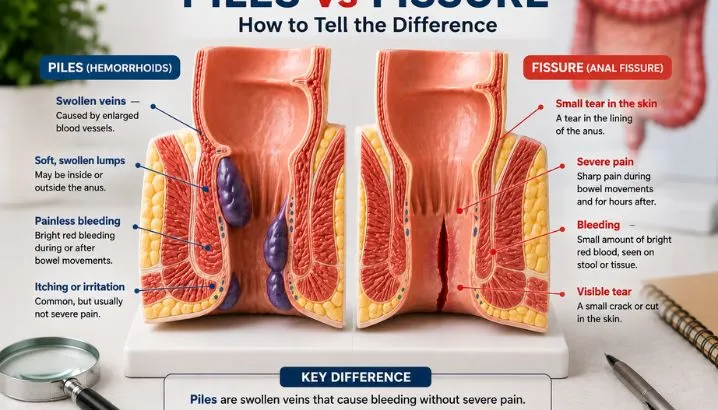
Piles are swollen, engorged blood vessels. A fissure is a small tear in the skin lining the anal canal. These are not variations of the same condition.
- Hemorrhoids, commonly called piles, are cushions of blood vessels in the rectum and anus that become swollen and inflamed, they can be internal or external
- An anal tear, or fissure, is a cut in the delicate skin of the anal canal, most often caused by passing a hard or large stool. For an independent, plain-language reference on this specific condition, MedlinePlus's overview of anal fissures covers the causes, exam process, and treatment options in more clinical detail than a comparison piece like this one can.
- Piles behave more like swollen tissue under pressure, a fissure behaves more like a wound that reopens with each bowel movement
- This structural difference is exactly why the pain, bleeding pattern, and treatment differ between the two
What Causes Each of These Conditions?
The root causes overlap significantly, chronic straining and constipation drive both, but the mechanism of injury differs.
- Piles develop when repeated pressure, from straining, prolonged sitting, pregnancy, or heavy lifting, causes the blood vessels in the anal area to swell over time.
- Since straining and constipation are the shared root cause behind both conditions, How To Prevent Piles? covers the lifestyle changes that reduce your risk of developing piles specifically, alongside the fissure prevention covered here.
- Fissures typically result from a single traumatic event, passing an especially hard or large stool that tears the delicate anal lining
- Chronic diarrhea can also cause fissures, through repeated irritation rather than pressure
- Rectal bleeding, sphincter spasm, and ongoing constipation can each worsen or prolong either condition once it starts
How Can You Tell Them Apart by Symptoms Alone?
Pain pattern is usually the single most reliable clue, though it's not foolproof.
| Feature | Piles (Hemorrhoids) | Fissure (Anal Tear) |
|---|---|---|
| Pain character | Often mild, or a dull ache/pressure, especially with larger piles | Sharp, intense, often described as "passing glass" |
| Timing of pain | May be present most of the time, worse with sitting or straining | Sudden, tied directly to the bowel movement itself, can linger afterward |
| Bleeding pattern | Bright red blood, often dripping into the toilet or on paper | Bright red streaks on stool or paper, generally less bleeding than piles |
| Visible signs | A lump or swelling near or in the anus | A small tear or skin tag near the anal opening |
| Itching | Common | Less common |
Neither of these patterns is a guaranteed self-diagnosis, they're a starting point for a conversation with your doctor, not a replacement for one.
Bleeding can happen in both, so bleeding alone doesn't tell you which one you have, but the pattern differs. If bleeding is your main symptom and you're trying to work out what's driving it, How To Stop Piles Bleeding? goes deeper into what piles-related bleeding specifically looks like and what actually helps stop it.
How Is Each One Actually Diagnosed?
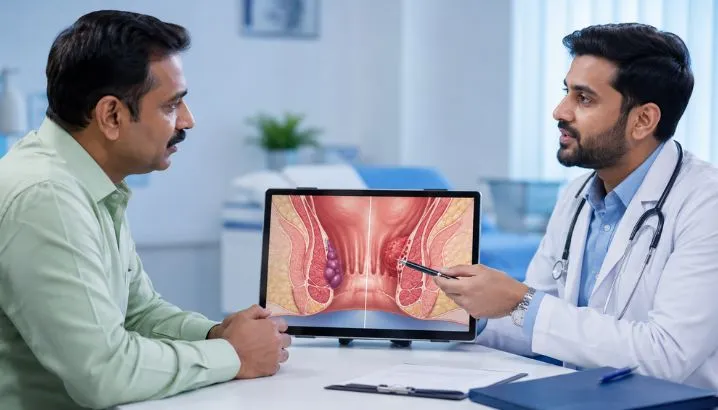
A brief physical examination usually settles the question within minutes.
- For piles, a visual and digital examination, sometimes combined with a proctoscopy, identifies size, grade, and location
- For a fissure, the tear is often visible on direct examination, sometimes gentle separation of the area is needed to see it clearly
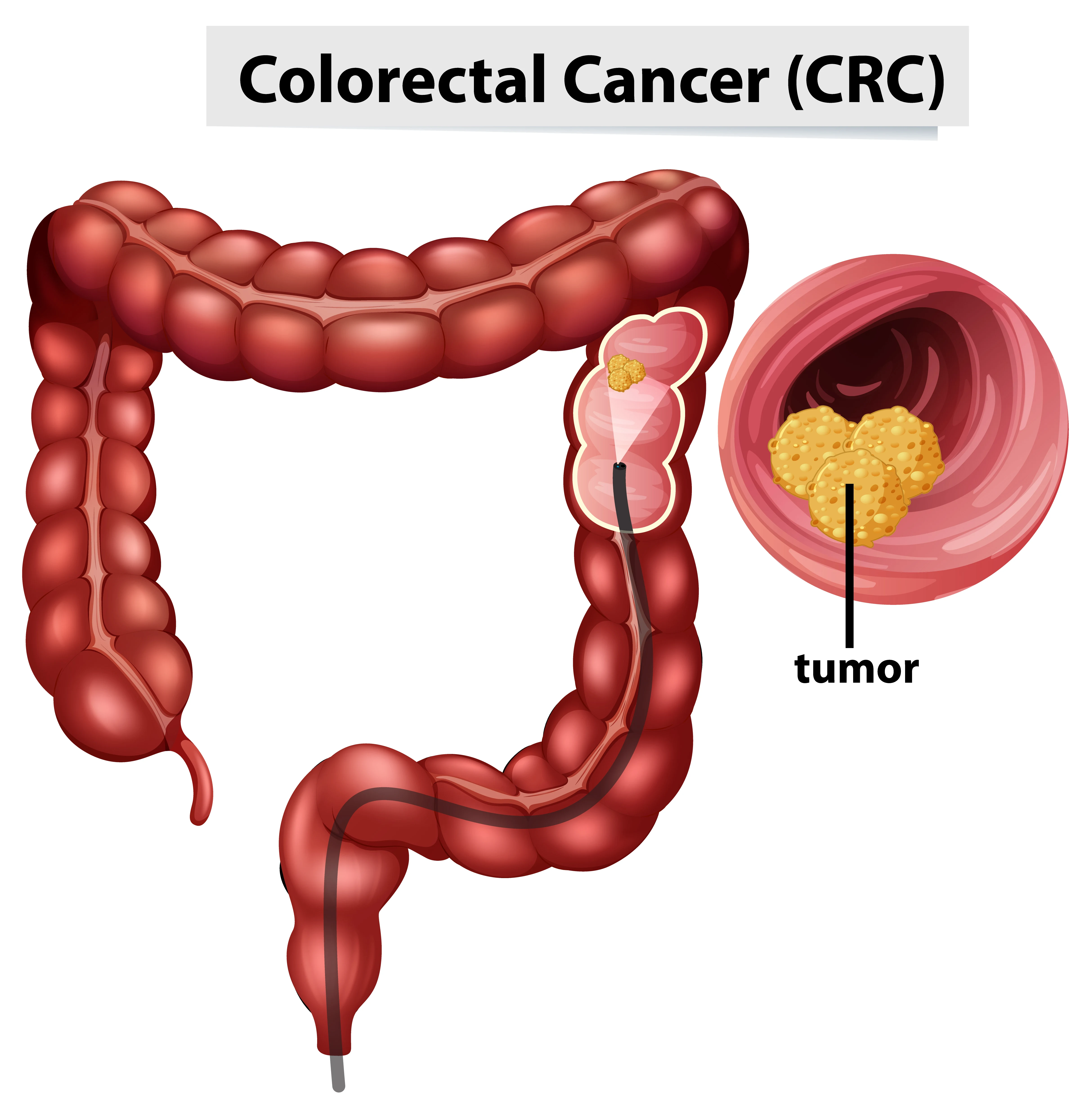
- If bleeding or symptoms don't fit a clear pattern, further evaluation like a colonoscopy may be recommended to rule out other causes
- This is why I always recommend an actual exam over guessing from symptoms, especially since treatment approaches genuinely differ
Are the Treatment Approaches Different?
Yes, meaningfully so, because you're treating two different kinds of tissue problems.
- Piles treatment ranges from dietary and lifestyle changes for mild cases to minimally invasive procedures like banding or laser therapy for more advanced grades
- Fissures are often treated first with stool softeners, topical ointments to relax the sphincter muscle, and sitz baths, many heal without surgery if caught early
- Chronic or non-healing fissures may need a minor procedure to relax the sphincter muscle and allow healing
- Using a piles treatment on a fissure, or vice versa, generally won't work, and can prolong your discomfort unnecessarily
Can You Have Both at the Same Time?
Yes, and this is more common than most patients expect.
- Chronic straining that causes piles can also eventually cause a fissure, and the two conditions can coexist and aggravate each other
- When both are present, symptoms can be more confusing, mixed pain patterns, bleeding from either source
- Treating only one condition when both are present often leaves symptoms partially unresolved
- This is another reason a proper examination matters more than assuming it's "just piles" or "just a fissure"
When Should You Stop Guessing and See a Doctor?
Persistent bleeding, pain lasting more than a few days, or symptoms that don't improve with basic dietary changes are all reasons to get examined.
- Any rectal bleeding that's new, heavy, or unexplained should be evaluated, not automatically assumed to be piles
- Pain that's sharp and consistently tied to bowel movements, lasting more than a week or two, needs assessment
- A visible lump, ongoing itching, or a non-healing tear are all reasons for a proper clinical look rather than continued home management
If you or a family member is unsure which condition you're dealing with, I see patients for GI and colorectal consultations at Lokmanya Hospitals, Pune.
Final Thoughts
Piles and fissures share a location and a few overlapping symptoms, but they're fundamentally different problems that need different treatment. Pain pattern and bleeding character offer useful clues, but a short clinical examination remains the most reliable way to know for certain, especially since both conditions can occur together. If you've been guessing at home for weeks without relief, that's usually the clearest sign it's time for an actual look rather than another home remedy.
Frequently Asked Questions
How do I know if it's piles or fissure without seeing a doctor?
You can't reliably know for certain from symptoms alone, sharp pain during bowel movements suggests fissure while painless bleeding suggests piles, but a clinical exam is the only accurate way to confirm.
Does fissure bleed like piles?
Fissures can bleed, usually as light streaks on stool or paper, but generally less than piles, which can bleed more visibly into the toilet.
Can piles and fissure happen together?
Yes, chronic straining can cause both conditions at once, and treating only one may leave symptoms unresolved.
Which is more painful, piles or fissure?
Fissures typically cause sharper, more intense pain, especially during and after bowel movements, while piles often cause a milder, more constant discomfort.
Can a fissure turn into piles?
No, they're different structural problems, though the same straining habits that cause a fissure can also lead to piles developing separately.
Do both conditions need surgery?
Not usually, many cases of both piles and fissures respond well to dietary changes and non-surgical treatment when caught early.
How long does a fissure take to heal on its own?
Many acute fissures heal within a few weeks with proper stool softening and topical care, chronic fissures may need further treatment.
Is rectal bleeding always piles or fissure?
No, persistent or unexplained rectal bleeding should be evaluated to rule out other causes, not automatically assumed to be either condition.
Can diet alone prevent both piles and fissures?
A high-fiber diet and adequate hydration significantly reduce risk for both, since straining and hard stools are a shared root cause.
Should I be embarrassed to get examined for this?
No, these are extremely common conditions, and a brief clinical exam is quick and far more useful than months of uncertainty and discomfort.

Dr. Suprashant Kulkarni
- MBBS | MS (General Surgery) | FICS | FALS | FACRSI | FMAS | FIAGES
Senior Consultant & Head - Department of General GI, MIS & Robotic Surgery
Previous blog