Piles or Cancer? How to Spot the Difference
Category: Gastroenterologist
 Tue Aug 25 2026


The moment a patient sees blood after a bowel movement, their mind often jumps straight to the worst possibility. In most cases, that fear is disproportionate to the actual risk, but not always, and knowing the difference matters. I'm Dr. Suprashant Kulkarni, Senior Consultant & Head of the Department of General GI, MIS & Robotic Surgery at Lokmanya Hospitals, Pune, and questions about piles or cancer symptoms patients bring to me are some of the most anxious ones I hear, so let's go through this calmly and clearly.
Key Takeaways
- Piles are extremely common, roughly half of adults experience them by age 50, colorectal cancer is far less common
- Having piles does not increase your risk of colorectal cancer, there's no proven causal link
- Bleeding color, timing, and accompanying symptoms offer real clues, but aren't a substitute for examination
- Certain red-flag symptoms beyond bleeding matter more than bleeding alone
- A simple exam, sometimes a colonoscopy, gives a definitive answer far more reliably than guessing
If You're Bleeding, Should You Actually Be Worried?
Statistically, most rectal bleeding in adults turns out to be from piles, not cancer, but that doesn't mean bleeding should be ignored.
- Hemorrhoids affect roughly half of adults by the age of 50, making them one of the most common reasons for rectal bleeding
- The lifetime risk of colorectal cancer is considerably lower, around 4 percent, though this rises with age and certain risk factors
- Importantly, having hemorrhoids does not itself raise your risk of developing colorectal cancer, they're unrelated conditions that happen to share a location
- That said, bleeding is still your body's way of signaling something needs attention, even when the odds favor a benign cause
What Makes Piles Bleeding Different from Cancer-Related Bleeding?
The color, timing, and pattern of bleeding offer real, useful clues, though none of them are absolute.
- Bleeding from piles is typically bright red, appearing on toilet paper, in the toilet water, or coating the surface of the stool, usually during or right after a bowel movement
- Bleeding linked to colorectal cancer can appear darker, sometimes almost black or tarry, and may occur at times unrelated to bowel movements
- Piles bleeding tends to be intermittent and tied to straining, cancer-related bleeding is often more persistent over time
- These patterns help guide suspicion, but they don't replace an actual examination, both types of bleeding can look similar in individual cases
Are There Other Symptoms Beyond Bleeding That Matter More?
Bleeding alone rarely tells the full story, it's the symptoms that come alongside it that carry more diagnostic weight.
- A genuine change in bowel habits, new-onset constipation, diarrhea, or narrower stools lasting more than a few weeks, deserves attention.
- If persistent constipation specifically is what you're noticing, Can Constipation Cause Cancer? addresses that exact worry directly and when it's actually worth raising with a doctor.
- Unexplained weight loss, persistent fatigue, or unexplained anemia are symptoms piles simply don't cause
- A constant sensation of incomplete emptying, even after passing stool, is a symptom worth mentioning to your doctor
- Persistent abdominal pain or bloating that doesn't resolve is another signal that goes beyond typical piles symptoms
Does Having Piles Increase Your Risk of Colorectal Cancer?
No, and this is one of the most important reassurances I give patients.
- Piles are swollen blood vessels, a mechanical and vascular issue, they are not a precancerous condition
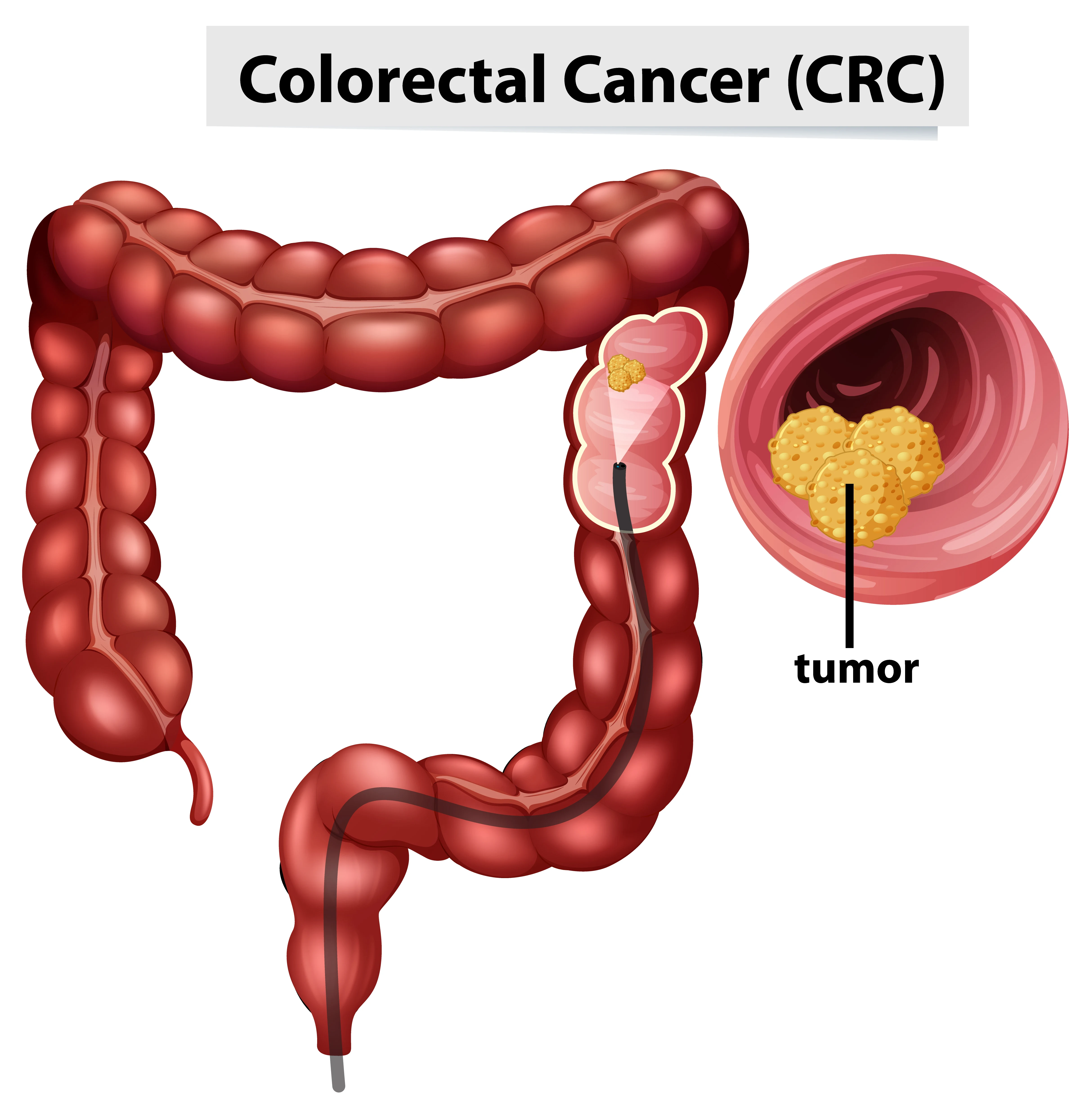
- Colorectal cancer develops through an entirely separate process, typically starting from polyps in the colon or rectum lining.
- If you want the fuller picture of how that process actually works, from polyp to diagnosis to treatment, What Is Colorectal Cancer? covers it in more depth than a piles-comparison piece like this one can.
- Having piles doesn't put you in a higher-risk category for colorectal cancer screening purposes
- The risk lies in assuming every symptom is "just piles" and delaying evaluation when something doesn't fit that pattern
How Do Doctors Actually Tell the Two Apart?
A focused clinical examination, and sometimes a colonoscopy, gives a far more reliable answer than any symptom checklist.
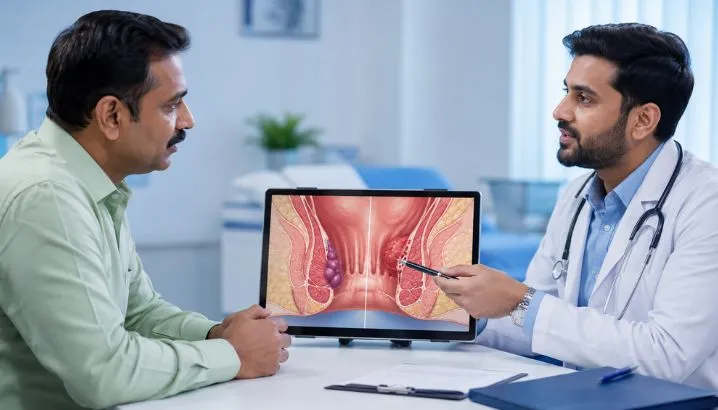
- A physical and digital rectal examination often identifies piles directly and can also detect other abnormalities that need further evaluation
- If symptoms don't clearly fit piles, or if red-flag features are present, a colonoscopy allows direct visualization of the entire colon and rectum
- Blood tests checking for anemia can pick up on chronic, low-level blood loss that wouldn't otherwise be obvious
- This evaluation is quick and far more definitive than trying to interpret symptoms on your own
Who Should Get Screened, Even Without Symptoms?
Screening isn't only for people with symptoms, age and family history matter independently.
- Routine colorectal cancer screening is generally recommended starting around age 45 to 50, depending on individual risk factors.
- The National Cancer Institute's screening guidance covers the different test options available, colonoscopy included, if you want an independent reference on what screening actually involves before that conversation with your doctor.
- A family history of colorectal cancer or certain inherited conditions can mean earlier or more frequent screening is appropriate
- Even without any bleeding or symptoms, these risk factors alone are reason enough to discuss screening with your doctor
- Early detection through screening significantly improves outcomes, this is true regardless of whether piles are also present
What Should You Do If You're Not Sure?
Get examined, that's genuinely the simplest and most reassuring answer.
- If bleeding persists beyond a week or two, or doesn't fit the typical bright-red, bowel-movement-linked pattern, see a doctor
- If you're self-treating presumed piles and symptoms aren't improving, that itself is a reason to get a proper evaluation rather than continue guessing
- Any new abdominal symptoms, weight loss, or fatigue alongside rectal bleeding should prompt a visit sooner rather than later
- If you're dealing with rectal bleeding and want a clear, accurate answer rather than continued uncertainty, I see patients for GI and colorectal consultations at Lokmanya Hospitals, Pune.
"Don't wait on uncertainty. Get it checked. Book an appointment with Dr. Suprashant Kulkarni at Lokmanya Hospitals, Pune, or Call Now to discuss your symptoms."
Final Thoughts
Most rectal bleeding turns out to be piles, and having piles doesn't raise your risk of colorectal cancer, that reassurance is grounded in real numbers, not wishful thinking.
At the same time, certain patterns dark or persistent bleeding, unexplained weight loss, and a real change in bowel habits genuinely deserve prompt evaluation rather than assumption.
The goal isn't to worry about every symptom, it's to know which signs are worth a conversation with your doctor, and to have that conversation instead of guessing.
Frequently Asked Questions
Can piles turn into cancer?
No, piles are a vascular condition and don't transform into cancer, they're entirely separate processes even though they occur in the same area.
How do I know if rectal bleeding is serious?
Bleeding that's dark, persistent, unrelated to bowel movements, or accompanied by weight loss or a change in bowel habits should be evaluated promptly.
Is dark blood in stool always cancer?
No, dark or tarry stool can have several causes, including bleeding higher in the digestive tract, but it does warrant medical evaluation to identify the cause.
At what age should I worry about rectal bleeding?
Any age warrants evaluation if bleeding persists, but risk of colorectal cancer increases notably after age 45 to 50, making screening more relevant then.
Do hemorrhoids cause weight loss?
No, unexplained weight loss is not a symptom of piles and should prompt further evaluation if it occurs alongside rectal bleeding.
How is colorectal cancer diagnosed if it's mistaken for piles?
A colonoscopy is typically used to directly visualize the colon and rectum when symptoms don't clearly fit a straightforward piles diagnosis.
Can I have both piles and colorectal cancer at the same time?
Yes, since they're unrelated conditions, having piles doesn't rule out a separate issue, this is exactly why persistent or unusual symptoms need direct evaluation.
Does family history matter if I already have piles?
Yes, a family history of colorectal cancer warrants earlier or more frequent screening, independent of whether you also have piles.
Is a colonoscopy painful?
Colonoscopies are typically done under sedation, most patients experience little to no discomfort during the procedure itself.
Should I get screened even if I have no symptoms?
Yes, routine screening starting around age 45 to 50, or earlier with family history, is recommended regardless of current symptoms.

Dr. Suprashant Kulkarni
- MBBS | MS (General Surgery) | FICS | FALS | FACRSI | FMAS | FIAGES
Senior Consultant & Head - Department of General GI, MIS & Robotic Surgery