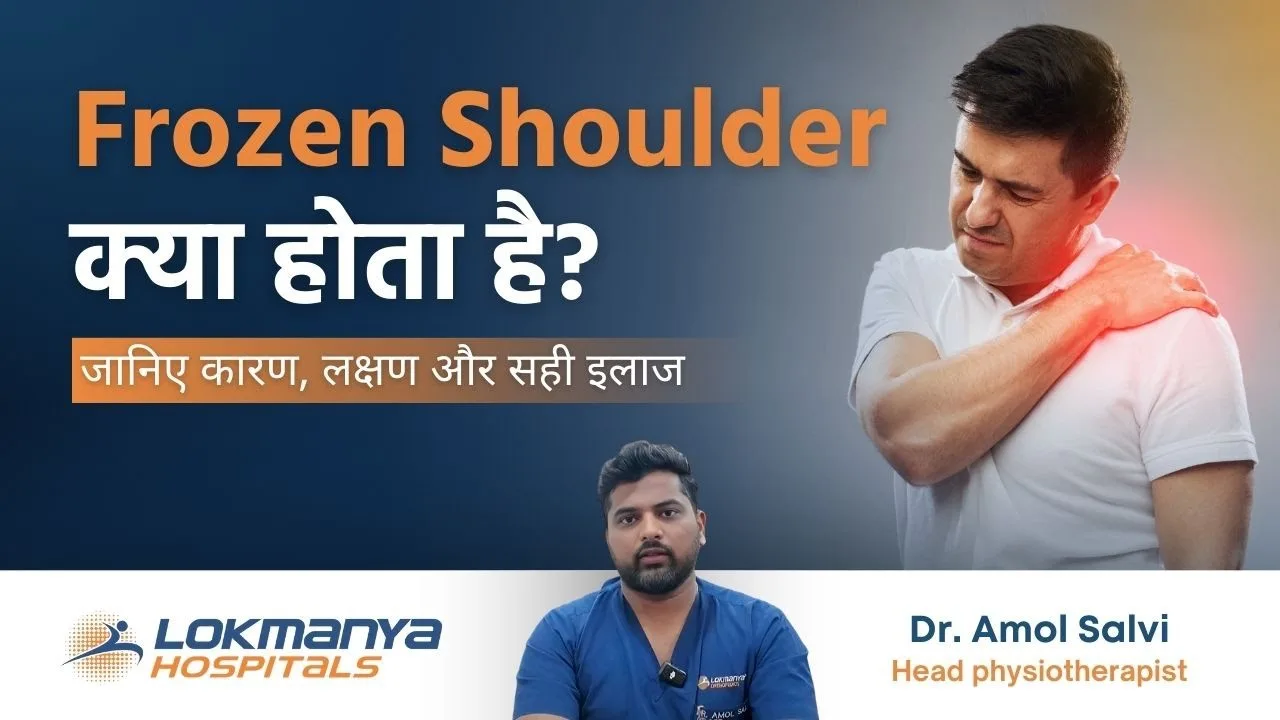
Why Proper Diagnosis Matters for Frozen Shoulder?
Category: Physiotherapy
 Wed Aug 26 2026


A patient once told me she'd been doing "frozen shoulder physiotherapy" for eight months with barely any improvement.
When we actually imaged her shoulder, it wasn't frozen shoulder at all, it was a rotator cuff tear that had been getting worse the entire time.
I'm Dr. Nikhil S. Likhate, Orthopaedic Surgeon & Joint Replacement Specialist at Lokmanya Hospitals, Pune, and this story is far more common than most patients realize, which is exactly why frozen shoulder treatment needs to start with an accurate diagnosis, not an assumption.
Key Takeaways
- "Frozen shoulder" is often used as a default label for any stiff, painful shoulder, even when it isn't the actual diagnosis
- Studies have found primary care referrals for frozen shoulder are accurately diagnosed in as few as 17 percent of cases
- Several other conditions, rotator cuff tears, bursitis, arthritis, mimic frozen shoulder closely
- Treating the wrong condition with frozen shoulder protocols can delay recovery or worsen the actual problem
- A proper exam and, when needed, imaging settles the question far more reliably than time and generic physiotherapy
Why Does "Frozen Shoulder" Get Used as a Catch-All Diagnosis?
Because a stiff, painful shoulder looks similar on the surface across several very different conditions, and "frozen shoulder" has become the reflexive label for most of them.
- Frozen shoulder, rotator cuff pathology, bursitis, and early arthritis can all present with pain and reduced movement
- Without a structured exam, it's genuinely difficult to tell them apart just from a patient's description of symptoms
- One published study tracking primary care referrals for frozen shoulder found an accurate diagnosis rate of only 17 percent, meaning the vast majority of those referred didn't actually have frozen shoulder
- This isn't a rare diagnostic slip, it's a well-documented, recurring pattern in shoulder pain evaluation
What Is Frozen Shoulder, Exactly?
Frozen shoulder, medically called adhesive capsulitis, is a specific condition where the capsule surrounding the shoulder joint thickens and tightens, causing progressive stiffness.
- It typically progresses through stages, freezing (painful, worsening stiffness), frozen (stiff but less painful), and thawing (gradual return of movement)
- A defining clinical feature is global loss of passive movement, meaning even when your doctor moves your arm for you, it won't move fully, this distinguishes it from many other shoulder conditions
- It's more common in people between 40 and 60, in people with diabetes or thyroid conditions, and often has no clear triggering injury
- Normal X-rays are actually part of the diagnosis, since the joint structure itself looks fine, it's the capsule that's the problem
What Else Could It Actually Be?
Several conditions mimic frozen shoulder closely enough to fool an untrained eye, and each needs a different treatment approach entirely.
- Rotator cuff tears cause pain and difficulty lifting the arm, especially overhead or behind the back, but typically don't cause the same global stiffness pattern.
- For an independent clinical reference on frozen shoulder itself, distinct from these mimics, MedlinePlus's overview covers the causes, exam findings, and typical recovery timeline.
- Bursitis, inflammation of the fluid-filled sac cushioning the shoulder, causes similar night pain and reduced mobility but responds to a different treatment approach
- Early shoulder arthritis can cause stiffness that looks similar but shows up clearly on imaging, unlike frozen shoulder
- Rarely, shoulder stiffness can be a red-flag symptom of something more serious, this is why persistent, worsening symptoms should never just be assumed to be frozen shoulder indefinitely
How Is Frozen Shoulder Properly Diagnosed?
A structured clinical exam is the foundation, imaging confirms or rules out the alternatives.
- The hallmark finding is restricted passive range of motion, your doctor testing how far your arm moves when they move it for you, not just how far you can move it yourself
- X-rays help rule out arthritis and confirm the joint structure itself is normal
- An MRI can distinguish frozen shoulder from a rotator cuff tear when the clinical picture isn't clear-cut, or when symptoms aren't responding as expected
- The diagnosis isn't guesswork, it's a specific clinical pattern that either fits or doesn't, and imaging settles genuine uncertainty
What Happens When the Diagnosis Is Wrong?
Wrong diagnosis usually means wrong treatment, and wrong treatment can actively delay recovery or worsen the underlying problem.
- Generic frozen shoulder physiotherapy applied to an actual rotator cuff tear can, in some cases, aggravate the tear rather than help it
- Months of ineffective treatment mean months of unnecessary pain and lost function, time that mattered for a condition that responds better to early, correct treatment
- Patients often arrive after prolonged, ineffective care, only to learn imaging was never done in the first place
- This is the core argument for proper diagnosis, it's not a formality, it directly determines whether treatment actually works
When Should Shoulder Pain Make You Push for Further Testing?
If treatment isn't working the way it should, that itself is diagnostic information worth acting on.
- If physiotherapy for presumed frozen shoulder isn't showing any improvement after several weeks, it's reasonable to ask whether imaging has been done
- Pain that's worsening rather than following the expected freeze-frozen-thaw pattern deserves a second look
- Any shoulder stiffness accompanied by unexplained weight loss, fatigue, or pain unrelated to movement needs prompt, thorough evaluation
- Age outside the typical 40 to 60 range for frozen shoulder, or absence of typical risk factors like diabetes, should prompt more careful diagnostic consideration rather than an automatic label
What Does the Right Treatment Path Actually Look Like?
Once the correct diagnosis is confirmed, treatment becomes far more targeted and effective.
- True frozen shoulder often responds well to a structured physiotherapy program, sometimes combined with a steroid injection to manage the painful early phase
- A rotator cuff tear may need a completely different approach, ranging from targeted rehabilitation to surgical repair depending on severity.
- When surgical repair is the right call, it's typically done through shoulder arthroscopy, a minimally invasive approach that lets us treat the actual torn tissue without the recovery burden of open surgery.
- Bursitis and arthritis each have their own distinct, evidence-based management paths
- Getting the diagnosis right the first time is what makes any of these treatments actually work as intended
If your shoulder pain and stiffness haven't improved despite treatment, or you've never had imaging to confirm the diagnosis, it's worth getting a focused evaluation. I see patients for shoulder and joint consultations at Lokmanya Hospitals, Pune.
Final Thoughts
Frozen shoulder is a real, well-understood condition, but it's also one of the most over-applied labels in shoulder medicine.
Getting the diagnosis right isn't a bureaucratic step, it's what determines whether months of treatment actually help or simply pass time while the real problem continues.
If your shoulder pain isn't following the expected pattern, or treatment isn't working, that's worth a second, more thorough look rather than more of the same approach.
Frequently Asked Questions
How long does frozen shoulder really take to heal?
It typically progresses over 12 to 18 months through its stages, though treatment can meaningfully shorten the painful phase and speed overall recovery.
Is frozen shoulder always the correct diagnosis for a stiff shoulder?
No, several conditions mimic it closely, studies have found accurate diagnosis rates as low as 17 percent in some primary care settings.
What tests confirm frozen shoulder?
A clinical exam checking passive range of motion is central, with X-rays to rule out arthritis and, when needed, an MRI to rule out a rotator cuff tear.
Can frozen shoulder be mistaken for a rotator cuff tear?
Yes, this is one of the most common misdiagnoses, and the treatment approaches for each differ significantly.
Why isn't my shoulder pain improving with physiotherapy?
It may mean the underlying diagnosis needs to be reconsidered, generic treatment for the wrong condition often shows little to no improvement.
Does frozen shoulder happen in both shoulders?
It can affect the second shoulder in some patients, though not always at the same time or with the same severity.
Is frozen shoulder linked to diabetes?
Yes, diabetes and thyroid conditions are recognized risk factors, and frozen shoulder tends to be more common and sometimes more prolonged in these patients.
Can frozen shoulder go away without treatment?
It can eventually resolve on its own over one to three years, but treatment significantly reduces pain and speeds up the process.
Do I need surgery for frozen shoulder?
Most cases respond to physiotherapy and injections, surgery is reserved for cases that don't improve with conservative treatment over time.
When should I get a second opinion on a frozen shoulder diagnosis?
If treatment isn't working as expected, symptoms don't follow the typical progression, or imaging was never done, a second opinion is reasonable.
Medical Disclaimer:
Content regarding shoulder pain, frozen shoulder, rotator cuff injuries, and joint treatments is for educational purposes only and not a substitute for clinical advice. Always consult a qualified orthopedic surgeon for accurate diagnosis and personalized treatment planning before beginning any rehabilitation program.

Dr. Nikhil S. Likhate
- MBBS | MNAMS | DNB | Fellowship in Revision Joint Replacement
Consultant Orthopaedic Surgeon & Joint Replacement Specialist