What Is the Difference Between EVLT and Vein Stripping Surgery?
Category: Blogs
 Fri Jun 26 2026


Your doctor has told you that your varicose veins need treatment. Now you are facing a choice that feels overwhelming: surgery with incisions and hospitalization or laser treatment that sounds almost too simple to be real.
Both work but they work differently, recover differently, and carry different risk profiles.
Understanding the distinction clearly will help you walk into your vascular consultation as an informed patient.
The question of endovenous laser treatment for varicose veins in Pune comes up daily in vascular consultations, and for good reason patients want to understand what they are agreeing to before they agree to it.
At Lokmanya Hospitals , a trusted multispecialty hospital with an experienced vascular surgery team, patients receive a thorough explanation of both options before any treatment decision is made. This article gives you that same clarity in writing.
Key Takeaways:
- How traditional vein stripping surgery works and why it was replaced as the standard of care
- The exact mechanism of endovenous laser treatment explained in plain language
- How the two treatments compare on results, recovery time, and recurrence
- Who is suitable for laser treatment and who may still need surgery
- What happens to the treated vein after laser a question almost no article answers
What Is Vein-Stripping Surgery and How Has It Been Used to Treat Varicose Veins?
Vein stripping was the dominant treatment for varicose veins for most of the twentieth century, and understanding it helps explain why the shift to laser treatment represented such a significant improvement for patients.
- The Surgical Procedure Explained
Vein stripping involves making incisions typically two to four small cuts at the groin and below the knee.
A flexible wire or rod is threaded through the length of the great saphenous vein, the main vessel responsible for most varicose vein disease.
The vein is then tied off at the top and physically pulled out through the lower incision.
Smaller tributary varicose veins the branches that are visibly bulging on the skin surface are removed through additional small cuts called "phlebectomy incisions" made along their course.
The procedure typically takes 60 to 90 minutes under general or spinal anaesthesia.
- What Hospitalisation and Recovery It Requires
Traditional vein stripping requires general anaesthesia and at least one night of hospitalization, sometimes two.
Post-operative recovery involves significant bruising and swelling along the entire course of the stripped vein often from the groin to the ankle.
Most patients are advised to take two to four weeks off work and avoid driving for at least two weeks.
The recovery is manageable but it is genuinely significant, and the visible bruising can persist for four to six weeks in some patients.
- Why Vein Stripping Was the Standard for Decades
It was effective. In an era before ultrasound guidance and thermal ablation technology, physically removing the diseased vein was the most reliable way to eliminate the source of venous reflux.
Five-year success rates for vein stripping were documented at 70 to 80 percent in well-performed cases respectable results that justified its use as first-line treatment.
For patients who are still weighing whether intervention of any kind is necessary, our article on what happens when varicose veins are left untreated for years outlines the documented progression from visible veins through skin changes, clot risk, and venous ulceration and makes the case for earlier rather than later treatment.
- The Limitations That Led to Something Better
The primary limitation of vein stripping is neovascularization, the regrowth of new, structurally fragile blood vessels at the surgical site as the body attempts to repair the disrupted tissue.
These new vessels lack competent valves and become the next generation of varicose veins. Studies tracking patients at ten years post-stripping show recurrence rates of 50 to 60 percent, the main driver of the shift toward less disruptive techniques.
What Is Endovenous Laser Treatment and How Does It Actually Work?
Endovenous laser treatment (EVLT) is a fundamentally different approach, not removing the vein but destroying it from the inside using controlled heat, leaving the vessel wall intact to be gradually absorbed by the body.
- The Laser Mechanism — Heat From Inside the Vein
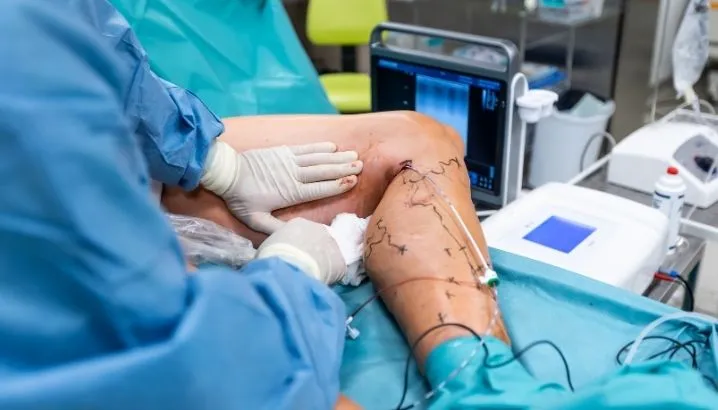
Under duplex ultrasound guidance, a thin laser fibre about the diameter of a piece of spaghetti is inserted into the diseased vein through a needle puncture, typically at the knee or calf level. No incisions are made.
The laser fibre is slowly withdrawn through the vein while emitting laser energy at precise intervals. This heat causes the inner lining of the vein wall to contract, collapse, and seal shut permanently.
The vein is not removed; it is closed. Over the following weeks and months, the body absorbs the collapsed vein wall and it gradually disappears from the tissue entirely.
- What Happens to the Vein After Treatment
This is the question every patient has and almost no article answers directly. After the vein is closed by laser heat, it becomes scar tissue, a thin, fibrous cord within the tissue.
The immune system recognises it as dead tissue and systematically breaks it down over three to twelve months. By one year post-treatment, most closed veins are no longer detectable on ultrasound.
Blood that previously flowed through the diseased vein is automatically rerouted through the deep venous system and healthy superficial tributaries; the circulation adapts without any consequence to the patient.
- The Role of Tumescent Anaesthesia
Almost no patient-facing article explains this and it is worth understanding. Before the laser fibre is activated, the surgeon injects a large volume of dilute local anaesthetic solution called tumescent anaesthesia around the vein through multiple small injections along the leg.
This solution serves three purposes simultaneously: it anaesthetises the tissue so the patient feels no pain during the procedure, it compresses the vein tightly around the laser fibre to improve closure efficiency, and it acts as a heat buffer protecting surrounding skin and nerves from thermal injury.
Tumescent anesthesia is what makes EVLT a walk-in, walk-out procedure performed under local anesthesia, eliminating the need for general anaesthesia, hospitalisation, and the associated risks that come with both.
- What the Patient Experiences
Most patients describe feeling pressure and mild warmth during the procedure, with the tumescent injections being the most uncomfortable part. The procedure itself takes 30 to 45 minutes per leg.
Patients walk out of the treatment room on their own legs, wearing compression stockings, and most return to normal daily activities, including desk work and light walking, within 24 to 48 hours.
How Do the Two Treatments Compare in Results and Recurrence?
This is the question that matters most clinically because a more comfortable procedure with worse long-term results is not a genuine advance.
- Success Rates: What the Evidence Shows
Multiple randomised controlled trials comparing EVLT with vein stripping including the influential EVRA trial published in the New England Journal of Medicine show that endovenous thermal ablation produces equivalent or superior vein closure rates to surgical stripping at one and five years. Technical success rates for EVLT consistently exceed 90 to 95 percent in experienced hands.
The Cochrane Collaboration's systematic review of venous treatments confirmed that endovenous techniques produce comparable clinical outcomes to surgery with significantly lower complication rates and faster recovery.
This is why current guidelines from the European Society for Vascular Surgery and the UK's National Institute for Health and Care Excellence both recommend endovenous thermal ablation as the preferred first-line treatment over surgery.
- Recurrence Rates, Which Holds Longer
Five-year recurrence rates after EVLT are consistently lower than after vein stripping approximately 15 to 25 percent versus 50 to 60 percent for surgery. The primary driver of this difference is the neovascularisation phenomenon that follows surgical disruption of tissue.
Because EVLT closes the vein without cutting or removing it leaving the surrounding tissue largely undisturbed the inflammatory stimulus for neovascularisation is substantially reduced.
The body has less reason to grow compensatory new vessels when the original vein has simply been sealed rather than torn out.
- The Role of Radiofrequency Ablation
This option is almost entirely absent from competitor comparison articles yet it deserves mention.
Radiofrequency ablation (RFA) uses the same endovenous approach as laser but generates heat through radiofrequency energy rather than laser light. Clinical outcomes are comparable to EVLT, with some studies suggesting slightly lower post-procedure pain levels with RFA.
Both are forms of endovenous thermal ablation same principle, different energy source. The choice between them depends on the treating surgeon's experience, the specific vein anatomy, and equipment availability.
EVLT vs Vein Stripping Surgery: Side-by-Side Comparison
Factor | Vein Stripping Surgery | Endovenous Laser Treatment (EVLT) |
| Procedure Type | Surgical — vein physically removed | Minimally invasive — vein sealed from inside |
| Anaesthesia | General or spinal | Local (tumescent) only |
| Hospitalisation | 1–2 nights required | Walk-in, walk-out same day |
| Procedure Time | 60–90 minutes | 30–45 minutes per leg |
| Incisions / Scars | 2–4 cuts at groin and knee | Single needle puncture, no visible scar |
| Post-Procedure Pain | High — prescription painkillers often needed | Mild — bruised sensation for 1–2 weeks |
| Return to Work | 2–3 weeks | 1–2 days |
| Return to Full Activity | 4–6 weeks | 2–3 weeks |
| Bruising Duration | 4–6 weeks | 2–3 weeks |
| 5-Year Recurrence Rate | 50–60% | 15–25% |
| DVT Risk | Present | ~0.5–1% (lower overall) |
| Nerve Injury Risk | Higher (vein physically pulled out) | Lower (surrounding tissue undisturbed) |
| Success Rate | 70–80% | 90–95%+ |
| Guideline Recommendation | Older standard of care | Current first-line treatment (NICE, ESVS) |
Which Treatment Causes Less Pain and Has a Faster Recovery?
On every measure of patient comfort and recovery speed, endovenous laser treatment outperforms surgical stripping and the difference is clinically significant, not marginal.
- Post-Procedure Pain Comparison
Patients undergoing EVLT report significantly lower post-procedure pain scores than those who have undergone vein stripping.
The absence of groin incisions, the absence of vein-pulling trauma through the tissue, and the preservation of surrounding structures all contribute to a dramatically less painful recovery.
Most EVLT patients describe a bruised sensation along the treated vein for one to two weeks, similar to the feeling after a deep muscle bruise.
Vein stripping patients frequently describe pain that requires prescription analgesia for the first week and continues at a lower level for three to four weeks.
- Return to Activity The Recovery Timeline Difference
After EVLT, most patients return to desk work within one to two days, resume light physical activity within a week, and return to full activity including exercise, within two to three weeks. Driving is typically safe within 24 to 48 hours, depending on which leg was treated.
After vein stripping, return to desk work takes two to three weeks, driving restrictions typically last two weeks minimum, and full physical activity is deferred for four to six weeks.
For working adults looking for varicose vein treatment in Pimpri Chinchwad or across Pune, particularly those with demanding professional or physical jobs, this difference in downtime is practically significant and worth factoring into the treatment decision well before the procedure date.
- Bruising and Visible Healing
Both procedures produce bruising along the treated vein. However, EVLT bruising is typically confined to the specific vein treated and resolves within two to three weeks.
Vein stripping bruising is more extensive, covering the entire course of the stripped vein and often involves the groin incision site, which takes four to six weeks to fully resolve.
Are There Risks Specific to Each Treatment?
Both procedures are safe in experienced hands, but their risk profiles differ in important ways.
- Risks Specific to Surgical Vein Stripping
General anesthesia carries its own risk profile including anesthetic reactions, respiratory complications, and cardiovascular stress that is eliminated entirely with local anesthesia EVLT.
Surgical incisions carry infection risk, and the groin incision specifically is at risk of wound complications in some patients.
Nerve injury, particularly to the saphenous nerve running alongside the saphenous vein, is more commonly reported after stripping than after laser treatment because the physical removal of the vein disrupts surrounding tissue, including nerve fibers.
- Risks Specific to Endovenous Laser Treatment
Skin burns are a theoretical risk if tumescent anesthesia is inadequate or improperly distributed, but in experienced hands this is extremely rare.
Post-procedure thrombophlebitis inflammation and transient clotting in the treated vein as it closes down occur in a minority of patients and typically resolves within two to three weeks with anti-inflammatory medication.
Deep vein thrombosis following EVLT is a recognized but uncommon complication reported in approximately 0.5 to 1 percent of cases in clinical literature.
This is managed with anticoagulation when detected and is one reason post-procedure duplex ultrasound follow-up is recommended.
Understanding how to recognize a DVT versus a superficial clot and which symptoms require same-day emergency assessment is covered in detail in our article on whether varicose veins can cause a blood clot and how DVT differs from superficial thrombophlebitis, which is relevant reading for any patient in the immediate post-procedure period.
Who Is a Suitable Candidate for Laser Treatment And Who Still Needs Surgery?
The majority of patients with symptomatic varicose veins caused by great or small saphenous vein incompetence are suitable candidates for endovenous laser treatment. The anatomy of the vein its size, straightness, and depth below the skin - determines technical suitability.
- When Laser Works Best?
Veins between 4mm and 15mm in diameter that run in a reasonably straight course and sit at adequate depth below the skin surface are ideal candidates for EVLT.
A pre-procedure duplex ultrasound mapping is essential; it measures the vein, identifies the incompetent segments, and confirms that laser access is feasible.
- When Surgery May Still Be Necessary?
Very large, tortuous veins; veins that run extremely close to the skin surface where heat injury risk is higher; cases involving complex recurrent disease after previous procedures; or specific anatomical variations may make surgical intervention more appropriate than laser in some patients.
This is a decision made by an experienced vascular specialist after reviewing the duplex ultrasound findings, not a generalization applicable to all patients.
If you are in Pune or Pimpri Chinchwad and weighing up your treatment options, the most valuable next step is a proper vascular assessment with duplex ultrasound mapping.
The vascular team at Lokmanya Hospitals provides comprehensive evaluation and an honest, evidence-based recommendation about whether endovenous laser treatment for varicose veins in Pune or surgical management is the right approach for your specific anatomy and disease stage. Visit lokmanyahospitals.com to book your consultation.
What Does Recovery Look Like After Laser Treatment?
Knowing what to expect removes the anxiety from the post-procedure period.
- Immediate Post-Procedure Care
Compression stockings are applied immediately after EVLT and worn continuously for the first 48 hours, then during waking hours for two to three weeks.
Walking is actively encouraged from the moment the procedure ends movement activates the calf pump and reduces the theoretical clot risk associated with any venous procedure.
Most patients drive themselves home or take routine transport. There is no requirement for someone to collect them under general anaesthesia protocols.
- Activity, Compression, and Follow-Up
Avoid high-impact exercise, hot baths, saunas, and prolonged immobility particularly long flights for the first two weeks. Light walking, desk work, and normal daily activities are appropriate from day one.
A duplex ultrasound follow-up at one to two weeks post-procedure confirms that the treated vein has closed successfully and checks for any deep vein involvement.
A further review at three to six months assesses residual or tributary veins that may benefit from additional sclerotherapy treatment.
Final Thoughts
The shift from vein stripping surgery to endovenous laser treatment represents one of the most patient-friendly advances in vascular surgery of the past two decades.
Same or better results. Substantially less pain. Dramatically faster recovery. Lower recurrence rates. No general anaesthesia.
That does not mean surgery is obsolete; there remain specific clinical situations where it is the right choice.
But for the majority of patients with varicose veins suitable for laser treatment, EVLT is the current evidence-based standard of care, endorsed by international vascular surgery guidelines.
The most important step is a proper assessment because the right treatment depends on your specific vein anatomy, not a generalisation.
That assessment is straightforward, non-invasive, and gives you a clear, personalised answer about exactly what your veins need.
Frequently Asked Questions
Is endovenous laser treatment for varicose veins covered by health insurance in India?
Coverage depends significantly on the insurer and policy type. When varicose vein treatment is medically documented as symptomatic involving pain, swelling, skin changes, or significant functional impairment many health insurance policies in India cover endovenous procedures. A formal diagnosis with clinical documentation of symptoms from a vascular specialist significantly strengthens an insurance claim. Purely cosmetic vein procedures are typically not covered.
Can varicose veins in both legs be treated with laser on the same day?
Bilateral EVLT treating both legs in a single session is performed in many vascular centres and is technically feasible. The decision depends on the extent of disease in each leg, the total procedure time, and the patient's overall health. Some surgeons prefer staged procedures treating one leg and reassessing before treating the other to minimise the cumulative post-procedure discomfort and the theoretical bilateral deep vein thrombosis risk.
Will the laser treatment leave any visible scars on my legs?
EVLT requires only a single needle puncture typically at the knee or calf for the laser fibre entry. This entry point heals to a mark barely visible to the naked eye within weeks, and in most patients becomes completely undetectable within three to six months. The absence of surgical incisions is one of the most cosmetically significant advantages of laser over stripping.
How do I know if my varicose veins are suitable for laser treatment without seeing a doctor?
You cannot determine this without a clinical assessment and duplex ultrasound scan. Vein suitability for EVLT depends on specific measurements: diameter, depth, straightness, and the anatomy of the incompetent segment that are only obtainable through ultrasound mapping. A single outpatient appointment with a duplex scan gives a definitive answer about which treatment approach is appropriate for your specific anatomy.
After laser treatment, do I need to avoid flying or travelling long distances?
Most vascular surgeons advise avoiding long-haul flights, typically those over four hours, for two to three weeks after EVLT. This recommendation is based on the theoretical increased clotting risk in the immediate post-procedure period when combined with the prolonged immobility of air travel. Short domestic travel is generally acceptable within days of the procedure, particularly with compression stockings worn throughout the journey and regular movement breaks.

Dr. Pranjal Melge
- MBBS, DNB (General Surgery), DrNB (Vascular Surgery)
Consultant Vascular & Endovascular Surgeon