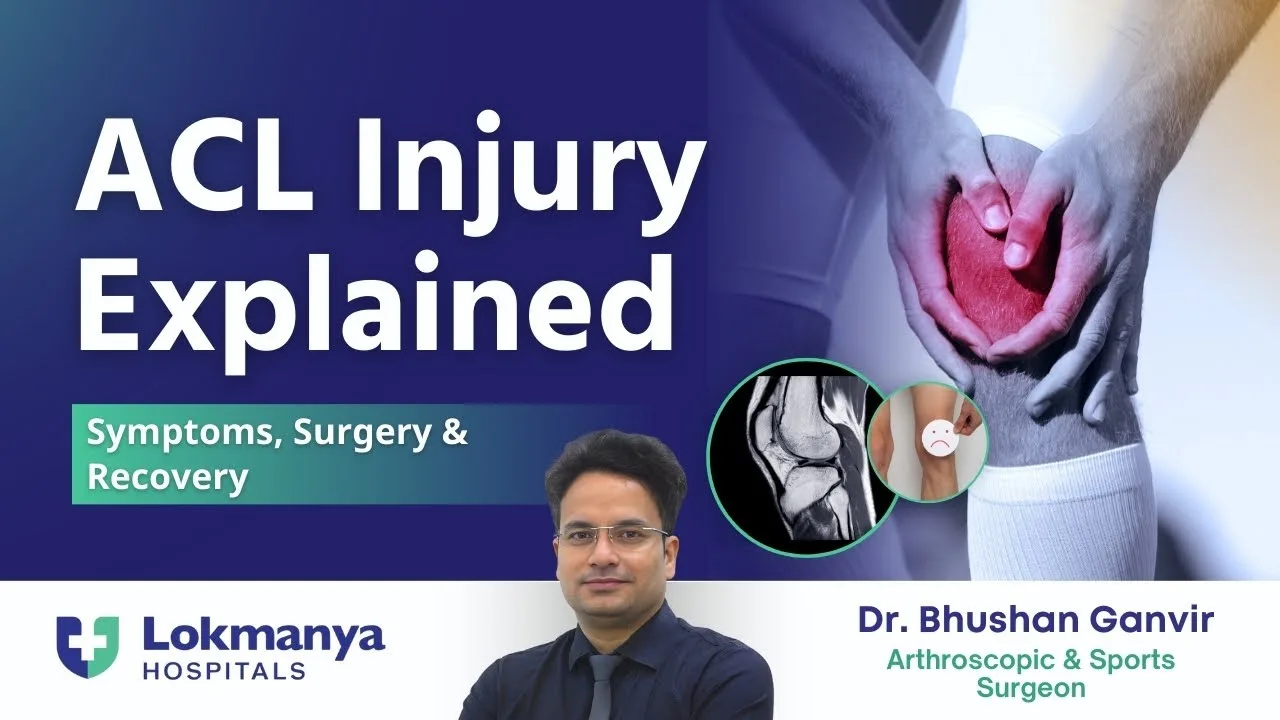
Anterior Cruciate Ligament (ACL) Injury of the Knee: Causes, Diagnosis, and Treatment
Category: Orthopedics
 Mon Jan 19 2026


Understanding the Role of the ACL in Knee Stability
The anterior cruciate ligament (ACL) is one of the most important stabilizing ligaments of the knee joint. It connects the thigh bone (femur) to the leg bone (tibia) and plays a critical role in maintaining rotational and twisting stability of the knee.
During activities such as walking, standing, running, or playing sports, the ACL helps control sudden changes in direction and prevents abnormal movement between the bones. This is why damage to this ligament often leads to a feeling of instability in the knee.
What Causes an ACL Injury?
ACL injuries most commonly occur due to a twisting movement of the knee. This typically happens when a person suddenly stops, changes direction, or lands awkwardly during physical activity.
In many cases, ACL tears occur without direct contact, especially during sports. These are referred to as non-contact sports injuries. However, in approximately 30% of cases, ACL injuries can also result from direct impact or collision, such as contact with another player or a forceful blow to the knee.
Common Symptoms After an ACL Injury
An ACL injury usually presents with noticeable symptoms immediately after the incident. These may include:
- Knee pain
- Swelling of the knee joint
- Reduced range of motion
- Difficulty walking or bearing weight
As swelling and pain increase, knee movement becomes limited, making early medical evaluation essential.
Initial Management of ACL Injuries
The first stage of treatment focuses on controlling pain and inflammation. This typically involves:
- Pain-relief medications such as non-steroidal anti-inflammatory drugs
- Application of ice packs
- Strict advice to avoid weight bearing
- Use of a long knee brace for support
Over the next 7 to 10 days, as pain and swelling settle, a more detailed clinical assessment of the knee can be performed.
Clinical Assessment and Diagnostic Evaluation
A thorough ACL assessment includes both subjective and objective evaluation.
Subjective Assessment
Patients are asked about their experience while walking, particularly whether they feel pain or a sense of instability. A common concern reported by patients is the lack of confidence in the knee, often described as a feeling that the knee might “give way.”
Objective Assessment and Imaging
If instability is suspected, physical examination is done to assess ligament laxity. To confirm the diagnosis and determine the severity of the injury, an MRI scan of the knee is recommended. MRI helps identify whether the ligament is partially or completely torn.
When Is ACL Surgery Recommended?
Surgical treatment is considered when:
- The patient experiences persistent knee instability
- Clinical examination shows ligament laxity
- MRI confirms an ACL tear
In such cases, arthroscopic ACL reconstruction is advised. This minimally invasive procedure involves reconstructing the damaged ligament using advanced arthroscopic techniques.
ACL Reconstruction Surgery: How It Works
ACL reconstruction involves creating a new ligament using the patient’s own tendon.
Commonly used graft options include:
- Hamstring tendon, which is the most frequently used
- Peroneus tendon, used in selected cases
- Bone–Tendon–Bone (BTB) graft, commonly preferred in European and American practices
The procedure usually takes 30 to 45 minutes, and most patients can be discharged from the hospital the following day.
Rehabilitation and Physiotherapy After ACL Surgery
While surgery is a crucial step, post-operative rehabilitation and physiotherapy are equally important for a successful outcome. Proper physiotherapy helps restore knee strength, improve stability, and gradually rebuild confidence in movement.
Without structured rehabilitation, even a well-performed surgery may not deliver optimal results.
Recovery Timeline After ACL Reconstruction
With consistent and guided physiotherapy, recovery generally follows this progression:
- Normal walking: within 2 to 3 months
- Brisk walking: around the third month
- Jogging: around the fourth month
- Return to impact sports: between 6 to 8 months
Individual recovery timelines may vary depending on adherence to rehabilitation and overall physical condition.
Key Factors for a Successful Outcome
Long-term success after an ACL injury depends on three essential elements:
- Accurate diagnosis
- Proper surgical intervention when required
- Dedicated and consistent physiotherapy
When these factors are addressed together, patients can return to normal daily activities and resume sports with confidence.
Conclusion
ACL injuries are common, especially among physically active individuals, but with timely diagnosis, appropriate treatment, and structured rehabilitation, full recovery is achievable. A well-planned approach allows patients to regain knee stability and return to an active lifestyle without long-term limitations.

Previous blog

What Is the Reason for Sleeplessness?
Next blog